
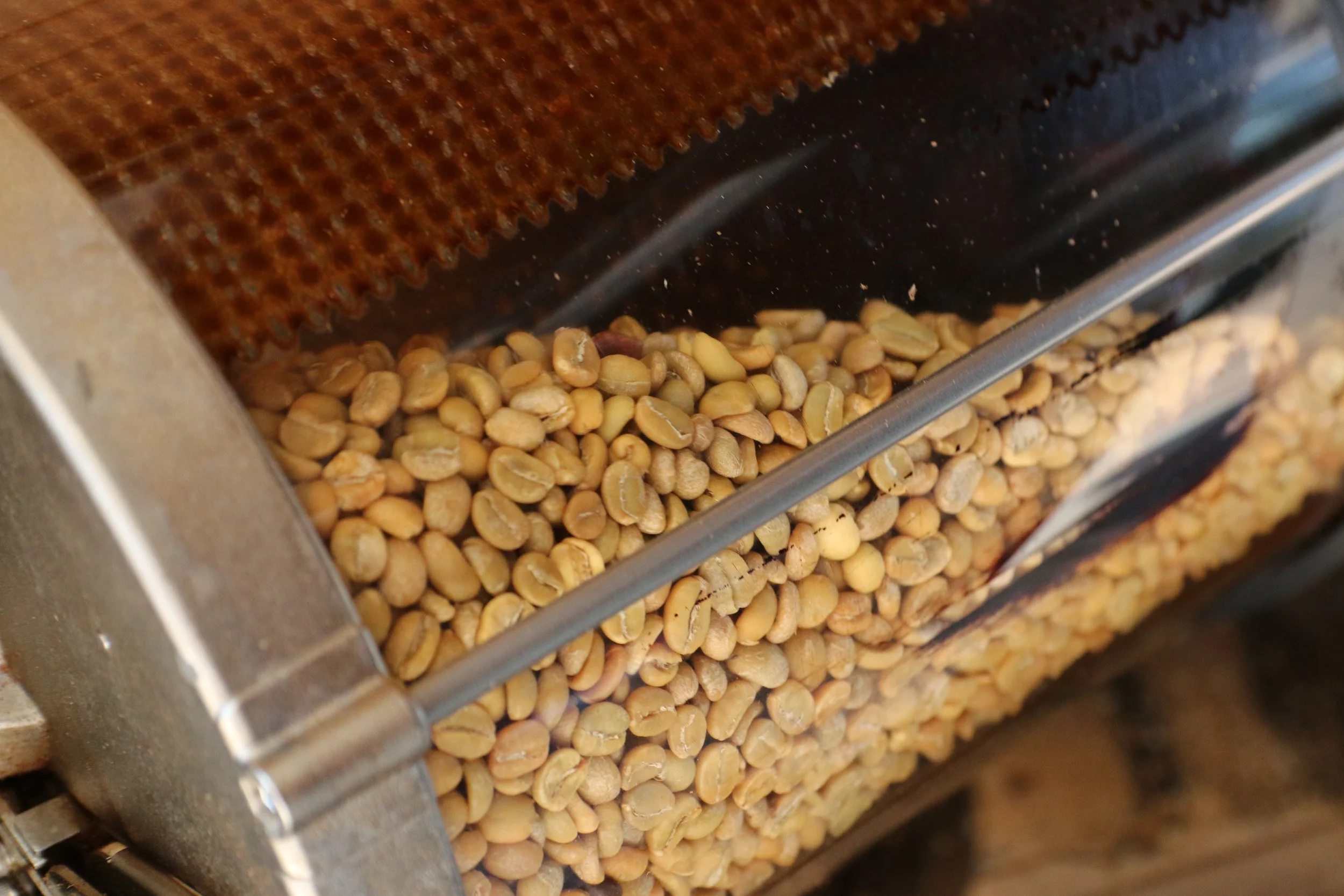
A journey to quality
At its core, the coffee process seems simple enough. You harvest the fruit, separate it, dry it, clean it, roast it, and drink it. But as someone deeply invested in creating a quality cup, the more you dig into the process, the more variables you uncover that make a big difference in the freshness, taste, and overall enjoyment of your morning coffee. It’s more than just sourcing great raw green beans and putting them through the roasting process. There are many critical data points to consider.
Let’s break down some of the main factors I think about when trying to create tasty coffee.
Sourcing: I get beans from well-respected farms in regions known for producing great coffee. I’m looking at farm and bean reputation, tasting score, and profiles that work with the flavours I’m trying to create. I prefer to use high-quality beans from Common Goal, an organization that works with exceptional farmers in the Antigua region of Guatemala.
Finding the right profile and region: The roasting process always has a great deal of trial and error to find and coax out the profile, blend, or flavour elements you want to highlight in a bean from a particular region. Especially when you’re working out a new bean or new roast.
Roasting for freshness: There’s two important factors here. Storage of your raw green coffee – away from the sun in sealed containers. And roasting to order. You can choose to roast in large batches. Sure, it saves time, it’s better for scale, and it’s easier. But if you’re nimble enough, you can roast to order and ensure that when the coffee is delivered it’s guaranteed to be fresh.
Proper cooling: It’s essential to quickly cool the newly roasted beans right away to prevent residual roasting after they leaves the heat of the machine.
Inspection: I roast between 7-8 pounds of coffee per hour, which is a small amount. But it also allows me to inspect every batch multiple times throughout the process; from load-in to cooling to bagging, I’m able to make sure every bean going into the bag has been properly assessed, with any delinquent beans tossed away.
Bagging: Believe it or not, how you store your roasted product makes a massive difference in quality. Choose bags or a receptacle that can vent out CO2 after the cooling process. It’s best to let it sit for at least 48 hours (but sometimes even longer! Read more about that here.)
Consumption: This part is largely outside of my control unless I’m serving the coffee. Here’s where it's up to the consumer how you want to prepare your cup (drip, french press, espresso). But there are still a lot of variables in your preparation that can affect the flavour outcomes; from how you grind it, to how quickly you get through your bag. I’ve put together some helpful hints for French press, and Aeropress, and I’m always happy to lend a hand if you ever have questions about the best ways to get a flavourful cup.
I think there’s something unique about the process of getting good coffee to your cup that goes beyond many products you consume. There are a ton of variables that as a roaster I can control and some that I can’t, from sourcing to roasting to packaging but in the end the amount of influence in the final product makes a huge difference in the outcome.
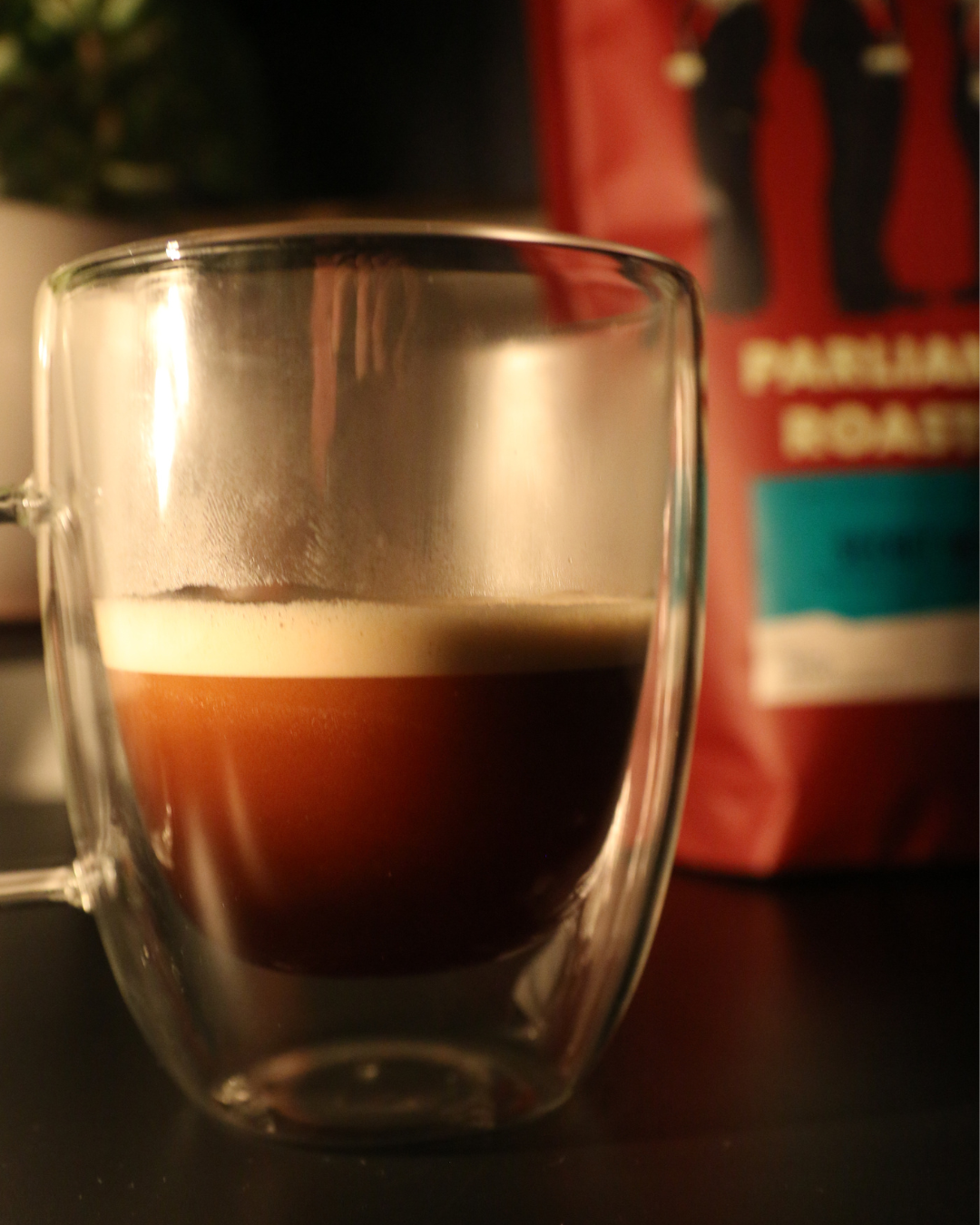
Split shot: The rise of the half-caf
A trend that’s in the early phases of adoption is the rise of half-decaf/half caffeinated coffee blends. It’s not just in your Starbucks latte anymore – in some spots you can get it right in the bag. A trend that gives customers the option to enjoy a bit of caffeine in the afternoon without staring at the ceiling late at night. Or a better morning brew for those coffee drinkers who love coffee but hate the jittery feeling that can come from a fully caffeinated cup. Termed a “split shot”, you’re essentially replacing half the caffeinated coffee with decaf to balance out the mix. It’s especially popular for those that are paying close attention to their caffeine consumption.
In fact, Swiss Water Decaf, one of the most prominent decaf roasters in the world, just challenged international roasters to create the best tasting half-caf blend this summer. We didn’t participate in that one, but it did get me thinking about the spectrum of caf/decaf blends and how there might be more to the idea, versus the typical either/or scenario. And for those that are caffeine conscious, this type of roast could help bridge the gap from simply switching to full decaf all the time.
I’ve started to see more roasters and cafes look holistically at their cafe to decaf offerings, offering more decaf drinks than just a traditional drip roast. I think we’re still a ways away from having decaf options as a prominent piece of a coffee companies roasted options, and you still aren’t seeing many roasted blended half-caf available for sale in bags, at least not yet.
What do you think? Would you buy half-caf blends if we offered it?
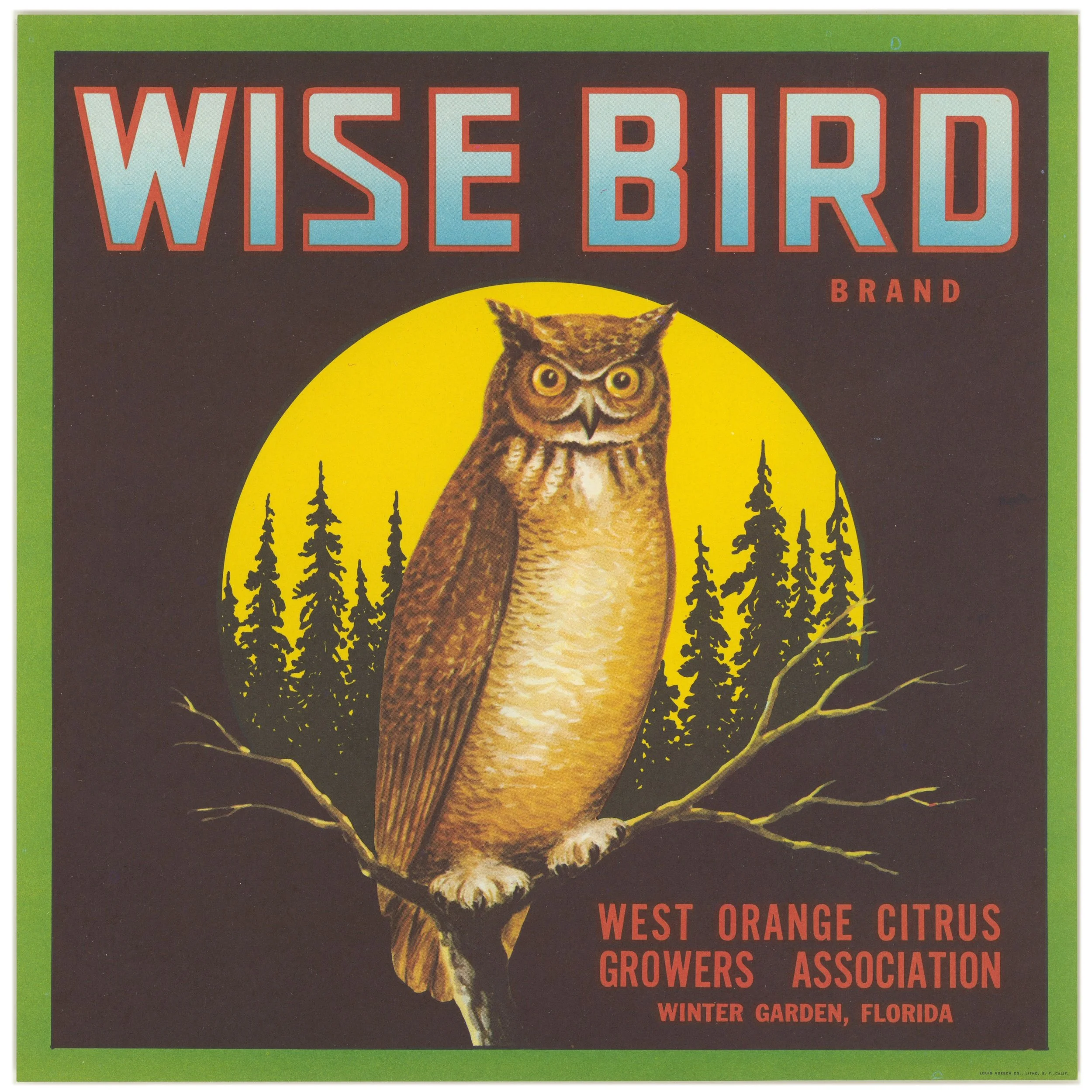
a Wise bird

What’s with the Wise Bird? What’s that all about Wayne?
I was watching “Honey I Shrunk the Kids” with my five year old son last month. It’s a great 90s classic that he loves. But I happened to briefly catch a random piece of art hanging in the Szalinski family kitchen. It’s only there for a few seconds, but it immediately stood out to me (for pretty obvious reasons).
I had to know what the heck it was and a bit of research gave me this insight. Wise Bird brand was a vintage citrus fruit label for from West Orange Citrus Growers Association of Winter Garden Florida, popular in the 1930s. IT was mainly used with oranges and grapefruits. I love the font and the graphic. You can actually find authentic prints of the label online and for a pretty decent price ($22.00 for a 9×9). I think it’ll look nice in the roastery.
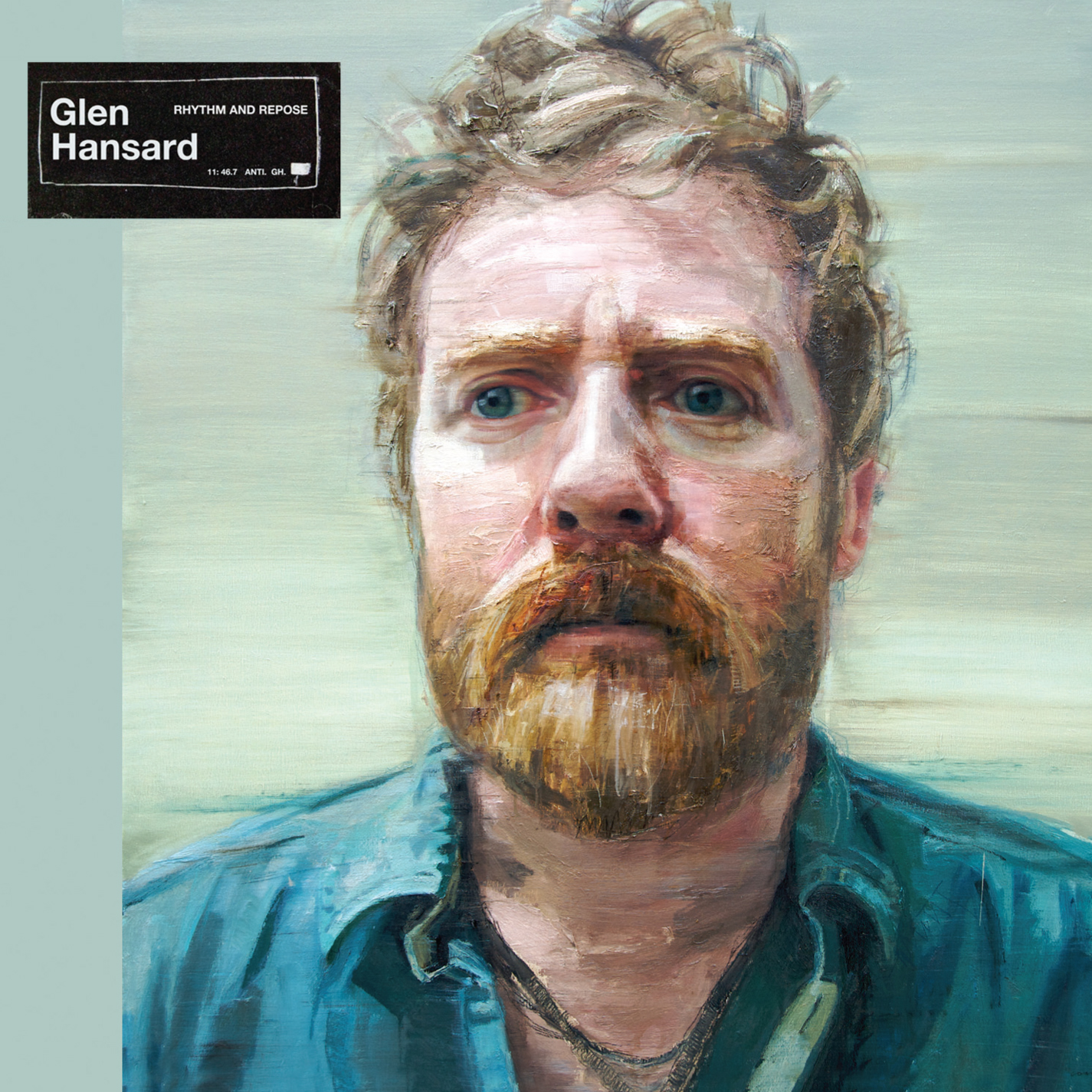
Glen hansard - rhythm and repose
It’s been a month of Glen Hansard on a heavy rotation in the roastery. I hadn’t listened to him in awhile but following his death I was definitely going through the catalogue and reminiscing of simpler times. Rhythm and Repose was his first solo album after the massive success of the film Once and his breakout with the Swell Season had put him on map. This one feels more personal and back to his roots. “Song of Good Hope” will always be an important one. And I really like “Talking with Wolves”. This album was particularly nice when I was up and roasting late into the night and prepping orders.
There’s nothing quite like Glen’s voice when everyone else is sleeping and you need to put another roast on the heat.
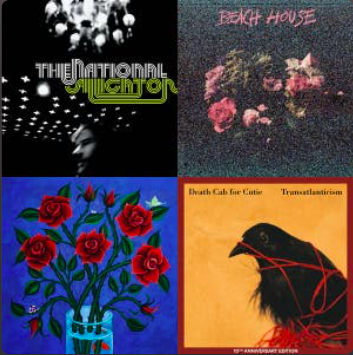
Music for a walk on a summer night
These days I’ve been going on more evening walks for exercise, to clear my head and enjoy the nice summer nights in White Rock. I’ve found a few tracks that really amplify the evening atmosphere. If you’re looking for a few songs to take with you and enjoy on a summer night, in my opinion, here are a few good ones:
Walk in the Park - Beach House
No Driver - Widowspeak
All the Wine - The National
Title and Registration - Death Cab for Cutie
Muzzle of Bees - Wilco
Fine Young Cannibals - Wolf Parade
Walkin’ on a Pretty Day - Kurt Vile
Cheaper Than Therapy - Rogue Wave
Strangers - The Kinks
Wild Horses - the Rolling Stones
What are some of your favourite songs to walk to? Send me some good ones to add to my playlist!
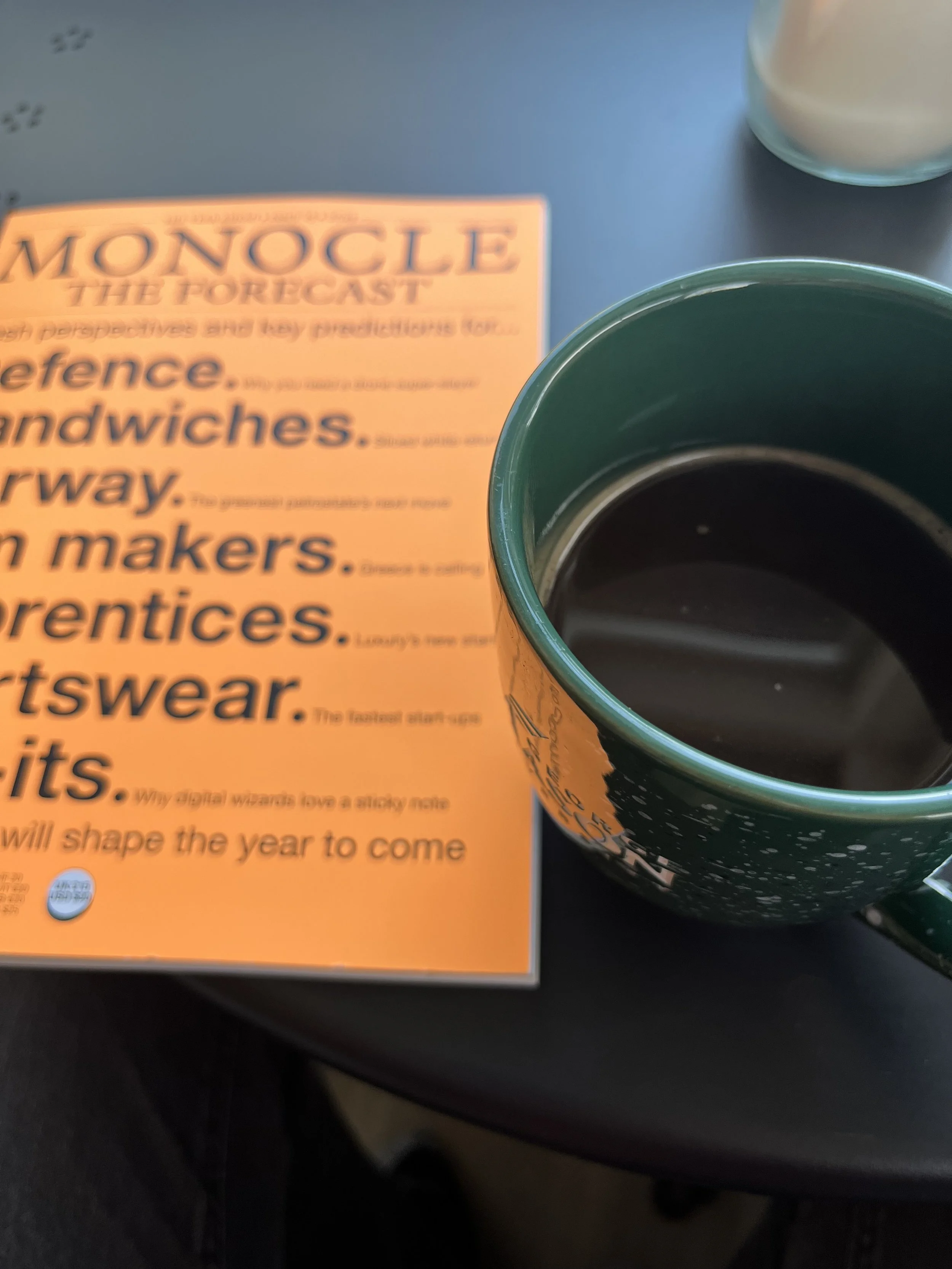
New Research links coffee consumption to reduced stress and increased cognition
Science says it! Drinking coffee makes you smarter. Well, maybe it isn’t quite that simple, but new research from the University of Cork in Ireland looked at how the consumption of coffee (caffeinated or otherwise) can lead to reduced feelings of anxiety, as well as improved attention by linking microbiota in the coffee to the gut-brain axis.
In the study 31 coffee drinkers and 31 non-coffee drinkers were closely studied through a series of tests. Participants eliminated coffee from their diets for two weeks and then it was blind-reintroduced with half consuming decaf and the other, full caf. The results of the study were super interesting. Both groups reported lower stress, and lower depression, suggesting that drinking coffee significantly improved mood, regardless of caffeine content. But the caffeinated drinkers showed increases of Eggertella' and 'Cryptobacterium curtum' bacteria, both of which play a key role in eliminating unhealthy gut bacteria and stomach infections.
The study also shows that coffee is more than just a vehicle for caffeine, it’s a complex system of microbes. A notable improvement in learning and memory was found only in those who consumed decaffeinated coffee, suggesting that components other than caffeine, such as polyphenols, could be responsible for the cognitive benefits.
“Our findings suggest that coffee, whether caffeinated or decaffeinated, can influence health in distinct but complementary ways.” said professor John Cryan, the author of the study and Principal Investigator at APC Microbiome Ireland.If you’d like to read the full scientific article you can access it here: Habitual coffee intake shapes the gut microbiome and modifies host physiology and cognition. And hey, next time you pour yourself some Parliament Roasting coffee, remember you’re helping increase your brain and gut health! Thanks University of Cork!
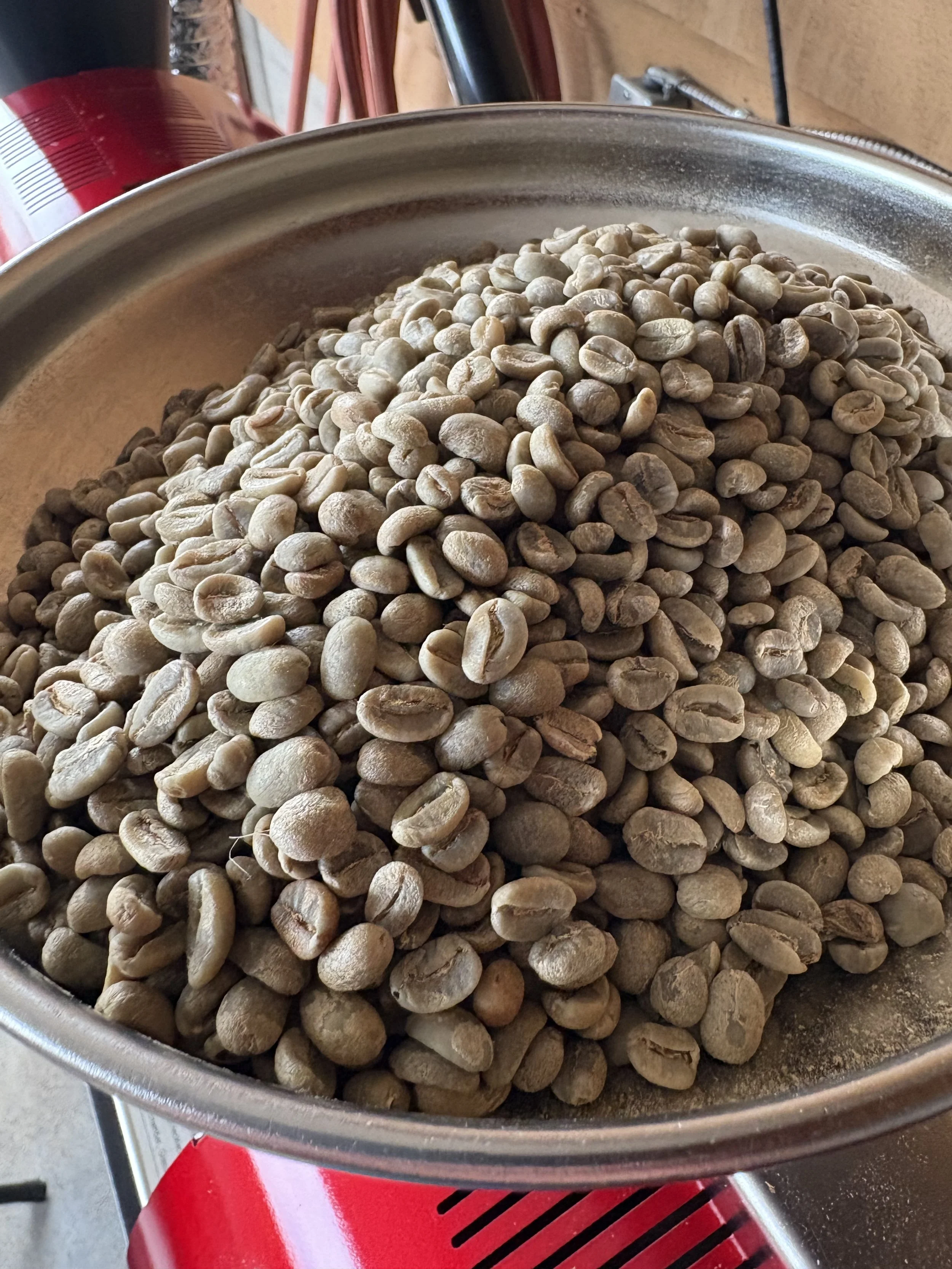
try your hand at roasting
If you’ve always wondered about roasting your own coffee or want to give it a try. It’s not as tricky as you think! In fact, you could do it in your kitchen with a popcorn air popper. (Although I recommend roasting outside unless you want a messy, chaffy kitchen.)
Here’s what you need:
Small air popper. Make sure it has side vents on the inside rather than a grid at the bottom, otherwise you won’t get enough air flow
Large metal colander
Small metal sieve
Green coffee beans (approx. 80g at a time)
Small scoop
Bowl to put the roasted coffee in.
With a popcorn popper you won’t be able to adjust your settings, so you’ll need to rely on your ears and listen for the first crack (that’s the auditory sign that your green beans are changing and roasting correctly, you can learn more about the roasting process here). You’ll know it when you hear it. It’s a distinct popping sound. You’ll want to aim to take the beans out about a minute or so after you hear the crack. When you’re dealing with small quantities of beans like this, it doesn’t take long to roast them – approx. 5-7 minutes for a medium roast. You’ll want to kill the power right away and dump the beans into the colander to cool them and shake off excess chaff.
Remember, coffee needs to de-gas for a day or two before you grind it up for your cup. Store the coffee in a cool, dark spot away from strong aromas or moisture.
If you want to give it a try let me know I’d be happy to give you some Guatemalan green beans to try with your next coffee order.

Momma - Household name
This one has definitely been my album of the summer so far. ‘Speeding 72’ made its way on the most recent Sibling Rivalry roast playlist and the whole album follows suit. For fans of Snail Mail, this one feels a little bit reminiscent of Lush. If you’re looking for a few other tracks to enjoy, take a listen to ‘Rip Off’ or “Rockstar”.
What’s been your album of the summer so far?
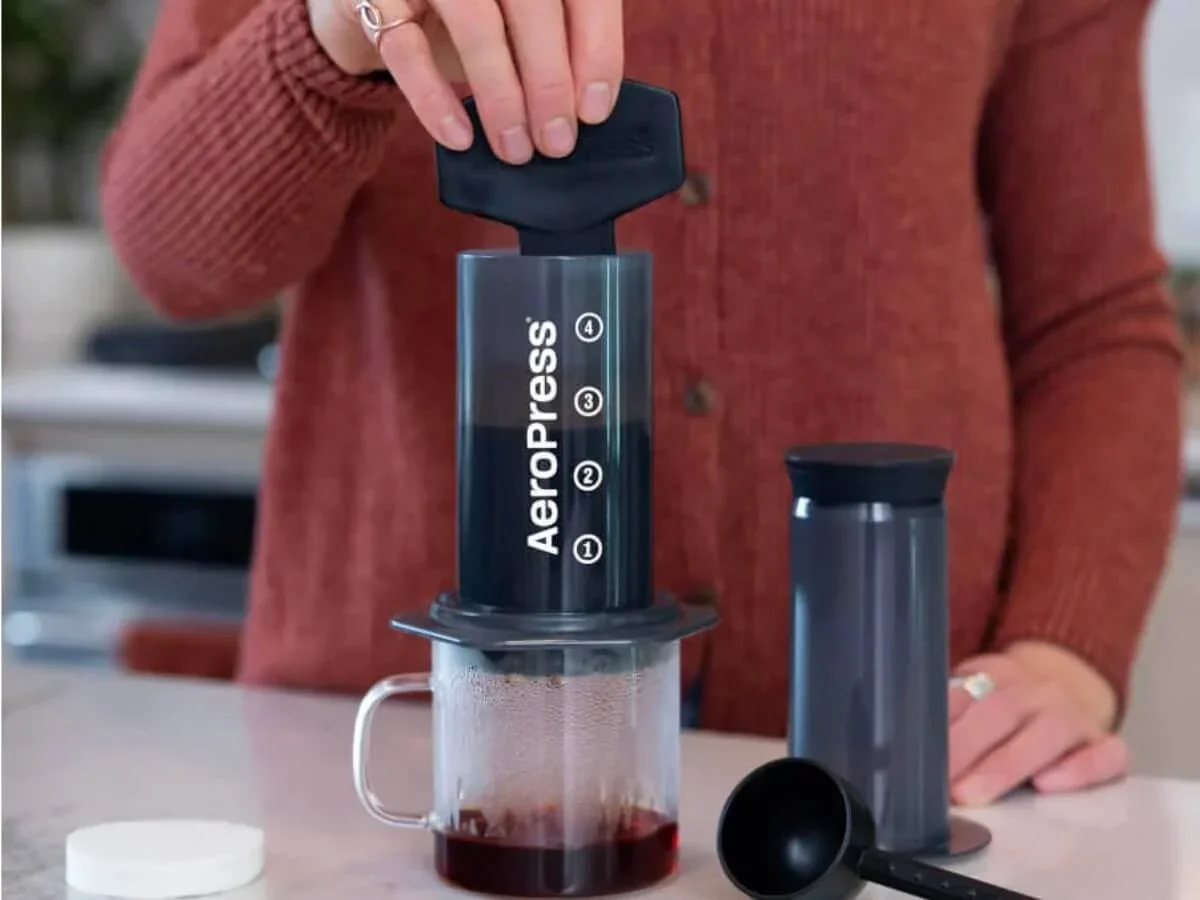
Try my aeropress recipe
If you’re looking for a new way to enjoy a cup of coffee, I recommend picking up an Aeropress and giving it a try. It’s also a great way to quickly make one cup of coffee especially if you’re making coffee-for-one. I find it super easy and it makes a really nice cup of coffee. Here’s what I do:
Boil your water. You don’t need much, about a cup and a half
Prep your Aeropress: Insert your filter, screw on the filter cap, place it on top of your mug
Grind your coffee: I like to do a medium coarse grind, about a 7/10 on my grinder
again, you don’t need much, about 18-20gmsScoop about 1.5 tablespoons of ground coffee into your Aeropress
Slowly pour your water into the Aeropress, if you have a gooseneck kettle, that works really well.
When you get to the top give it a good stir to break the crust and move it around. You’ll see that some
coffee has gone through the filter. That’s ok! Pour more water back in to fill it up to the top againHere’s a critical step. Put the plunger into the top of the Aeropress to create a bit of a vacuum seal, don’t plunge it yet let the vacuum seal hold the coffee in the press.
Let it sit for about 45sec to 1min before slowly plunging it down and pressing the coffee through the filter into your mug.
Give it a minute or so to sit and cool and then enjoy! From start to finish it’ll take you less than 5mins to make a really great cup of coffee.
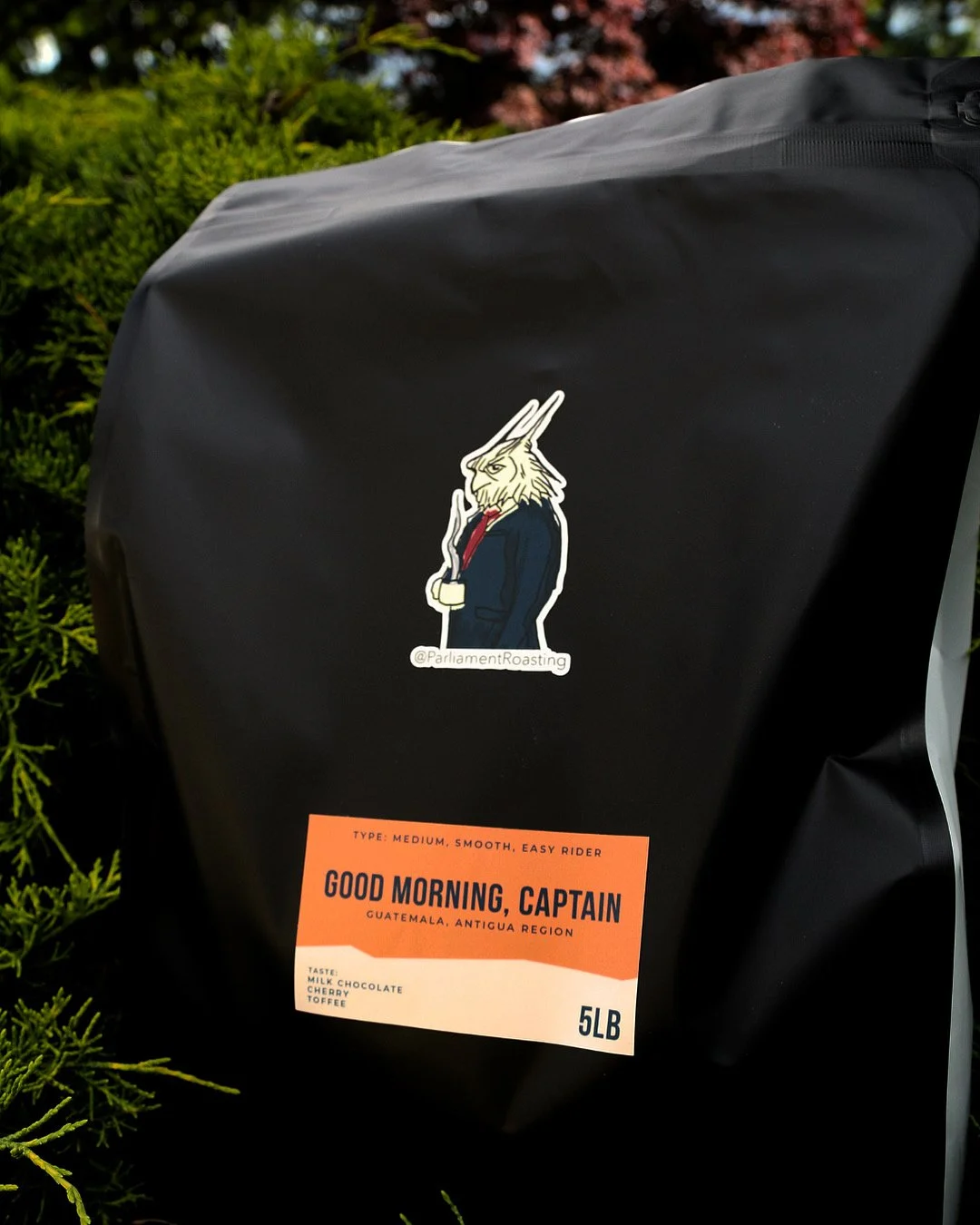
announcing our wholesale partnership program
We’re excited to explore a new method of getting Parliament Roasting coffee to you. Announcing our new wholesale partnership program. Would you like to purchase coffee in larger quantities – either whole bean or specially ground – to bring Parliament Roasting to your home, business, cafe, or office? We can do that!
We’re excited to kick off this program with a special partnership with Peace Arch Hospital in White Rock, BC. We’ll be supplying wholesale coffee to a cart that serves doctors, nurses, and patients much needed coffee in the Emergency ward of the hospital. As some of you may know, I recently dealt with a fairly serious medical emergency and spent time at both Peace Arch Hospital and Vancouver General. This partnership means a lot to me and I'm really proud to supply coffee to the people who do the amazing lifesaving work at Peace Arch.
If you’re interested in exploring more about our wholesale program, we’d love to start that conversation and put together a program that can work for you!
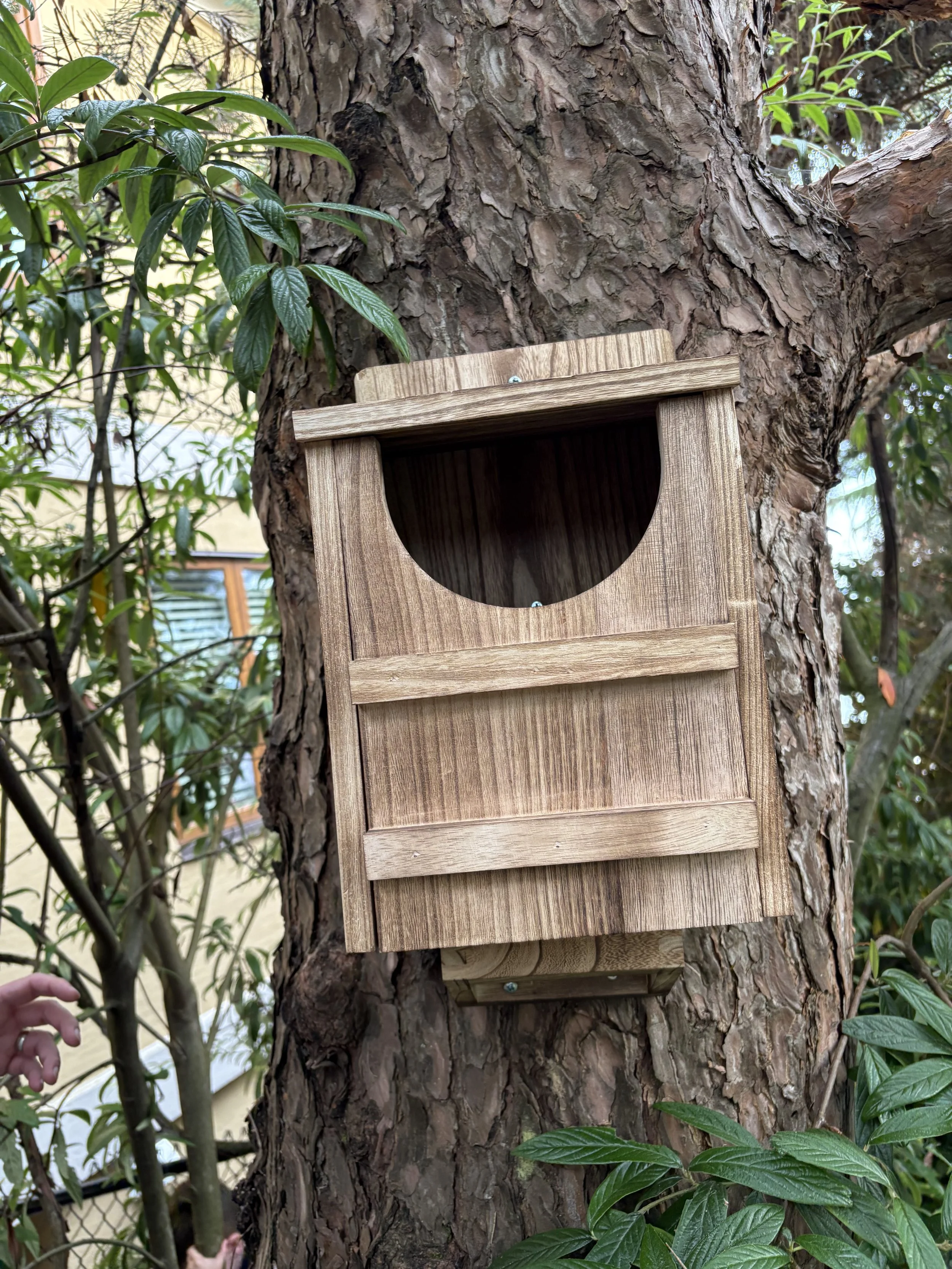
build your own owl box
We are officially on #OwlWatch2026. I figured I’d really lean into this ‘Owls in the Family’ vibe and see if I could attract one in my own backyard. Now I’m not expecting a parliament of owls to move in tomorrow. But maybe one might?!
Okay. So some quick research tells me it’s not exactly the perfect time for an owl to move into new digs (it typically happens in early spring when they’re looking for a place to lay their eggs) but credible research says that even if they don’t move in for good, they like a good box to perch and hangout. And that’s good enough for me. They can rent to own and maybe make it permanent next year.
There’s lots of great instructions online to help you build your own, but here’s a few helpful hints. Building an owl box requires untreated, weather-resistant wood (like cedar), and a nice big properly-sized entrance hole, drainage, and ventilation. You’ll want to make shallow, horizontal chisel or saw cuts on the inside of the front panel below the hole so baby owls can climb.
If you’re really looking for a fun challenge, Fraser Valley Conservancy has some pretty fancy plans and lots of information on how to really make some stellar owl boxes. I didn’t quite have the time, tools, or quite frankly the space to go that intense. I did find a relatively cheap and easy to assemble owl box from Amazon that arrived in less than a day and I think it could home some lovely screech owls.
Here’s hoping we’ll get an owl to call the backyard home. Stay tuned and I will continue to update all the loyal readers on #OwlWatch2026
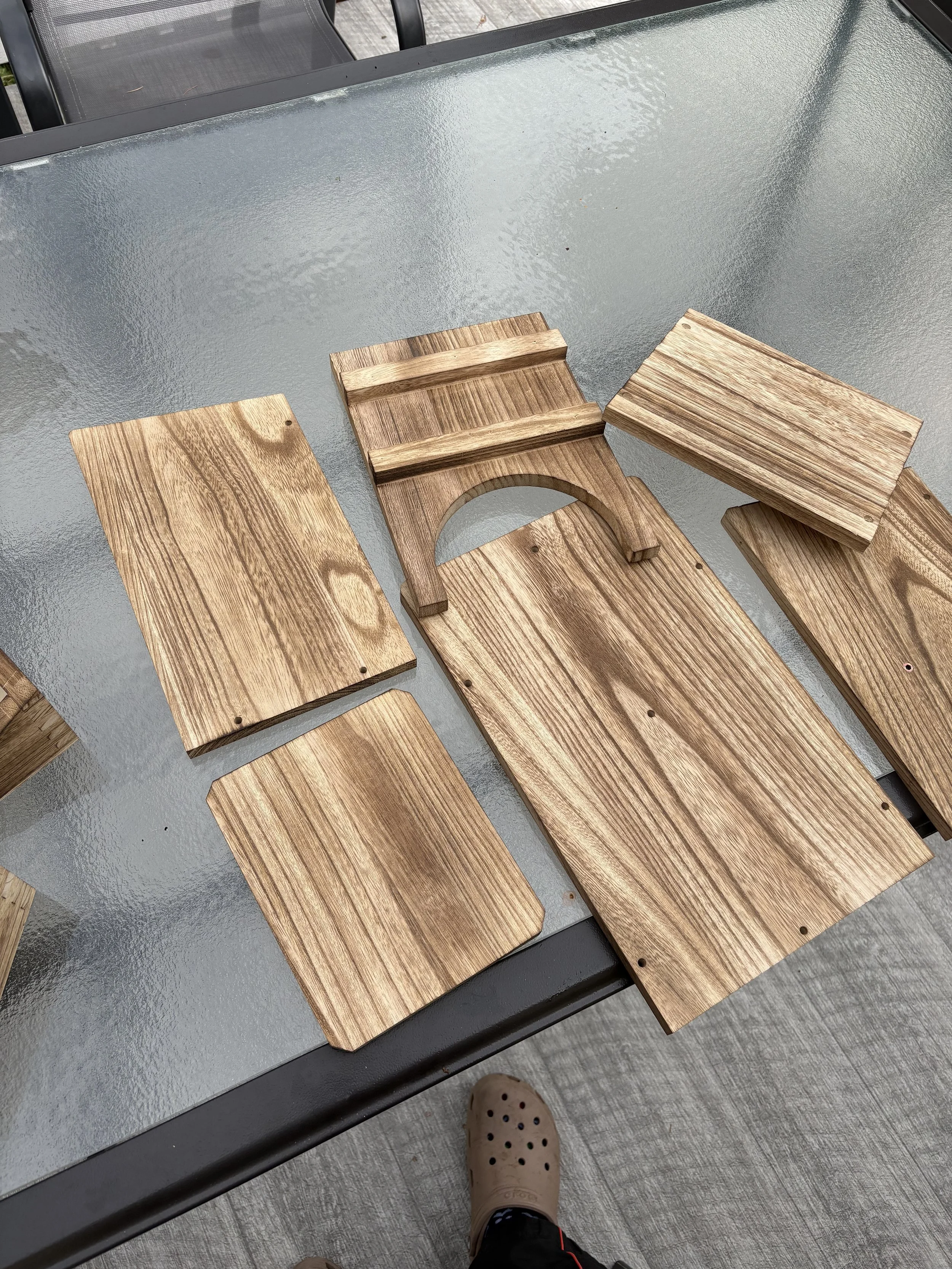
It was really easy to build!
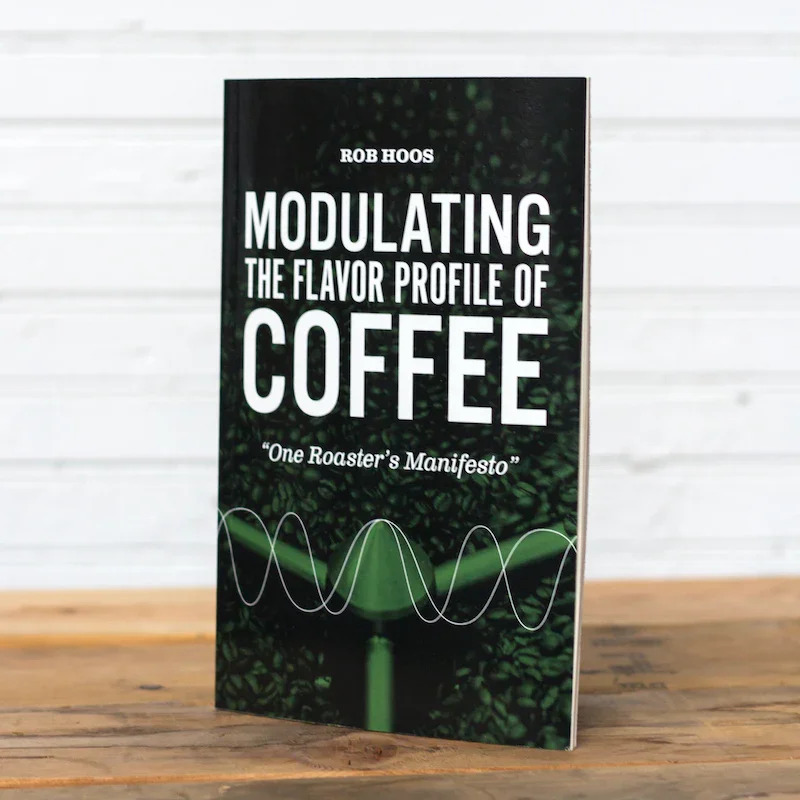
coffee roasting resources
I’m commonly asked by folks at farmers markets if there are books or other resources I would recommend for those that want to understand coffee roasting and flavour profiling. I’ve read a few books that have helped me dial in flavours and understand some of the science behind roasting good coffee. In my mind, there are two authors in particular that stand out and take a deeper, more scientific approach on the subject: Scott Rao and Rob Hoos.
Both have put out multiple books that are well worth a read, but I’ll preview one from each of them that stand out.
Coffee Roasting Best Practices - Scott Rao
Think of this one as coffee roasting 101, your textbook to roasting great coffee. It’s a culmination of 25 years of coffee roasting experience. A book that focuses on more advanced techniques and gives the reader an understanding of roasting curves and the all important ‘ROR’, or, Rate of Rise (the speed in which a coffee bean’s temperature increases, typically measured in degrees per minute). It’s particularly important if you’re trying to figure out how to consistently roast good coffee over and over again. Rao is very interested in using data driven models that go beyond simply using your eyes, nose, and ears. And while I personally don’t always subscribe to these data-driven methods in my roasting practices, they are important to understand and Rao’s analysis of the science is key to understanding coffee..
Modulating the Flavour Profile of Coffee - Rob Hoos
If Scott Raos wrote the roasting textbook. Rob Hoos penned the thesis. Modulating the Flavour Profile of Coffee is a manifesto on how to build flavour throughout the roast. If you’re interested in roasting, this one is required reading. And at only 66 pages, it’s fast to digest. Think of it as a behind-the-scenes look at the mechanics of flavor development across five distinct and controllable sections of the roasting process (drying phase; Maillard reaction; development phase; sugar caramelization; total time). It gives you, the roaster, a better understanding of those five control points, and ways to finesse the roasting environment around those points. I’m personally more drawn to Rob Hoos’ book, as breaking down and focusing the roasting process on those five controllable sections makes a lot of sense to me. It can also serve as a good way to troubleshoot why a particular roast isn’t turning out the way you thought it might. (Is your roast tasting muted and baked? Your drying phase might be too long and your Maillard phase too short)
If you’re interested in reading more about roasting, or you’re having trouble tracking down these titles. You can happily borrow one of these books to read when you order your next bag! Just let me know.

Widowspeak - Roses
This one happened to be one I just stumbled upon. I’ve been really enjoying the 2026 album “Roses” by Widowspeak, that just came out on June 4. They’ve been described as ‘cowboy pop’ and I can get behind that descriptor! I have a song in my recent playlist for the ‘Sibling Rivalry’ medium roast but honestly the whole album is pretty great. It’s well worth a listen if you like the easy-going chillwave indie that sounds like a summer night.
I’m partial to tracks “No Driver” and '“Soft Cover”.
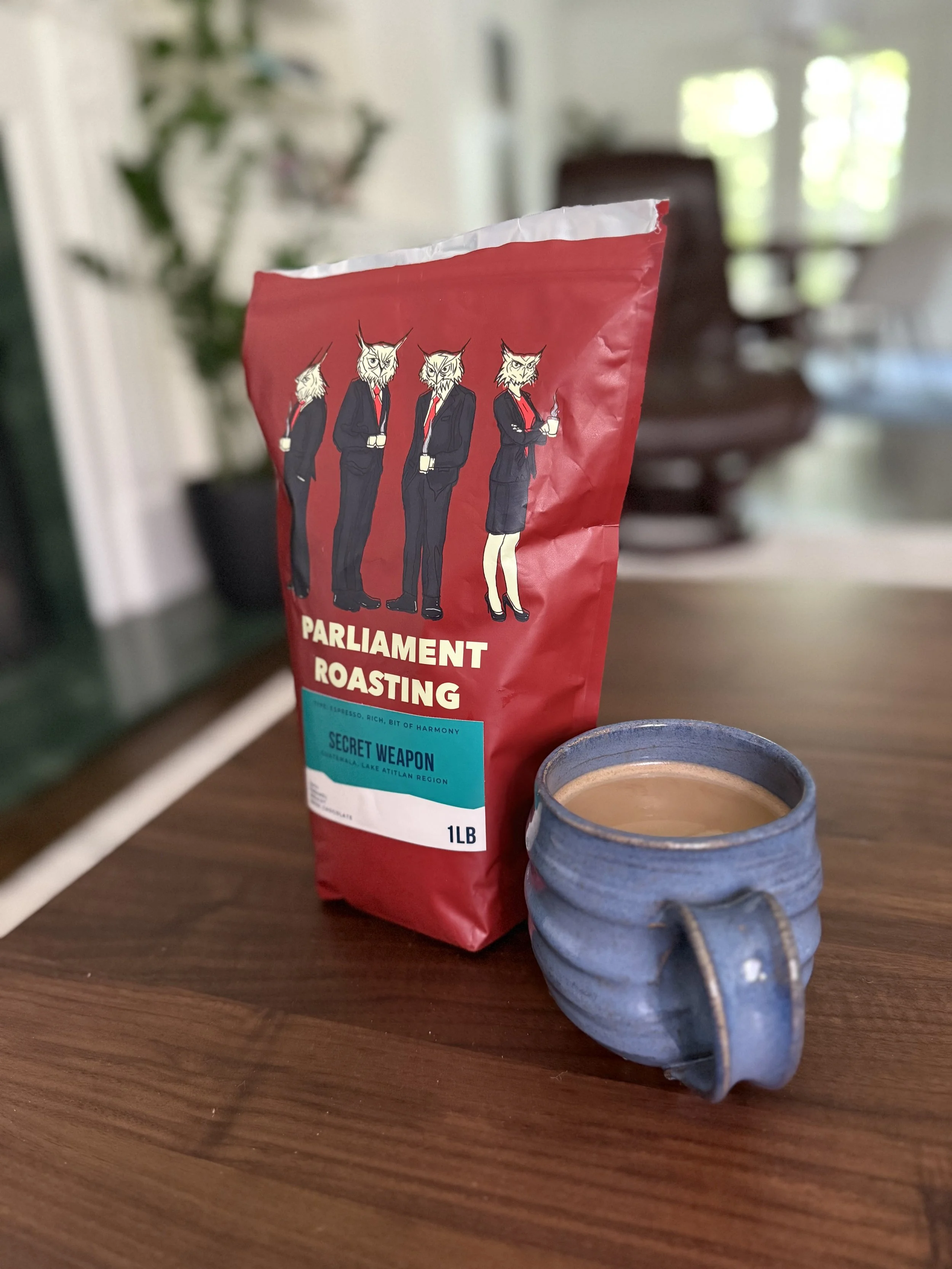
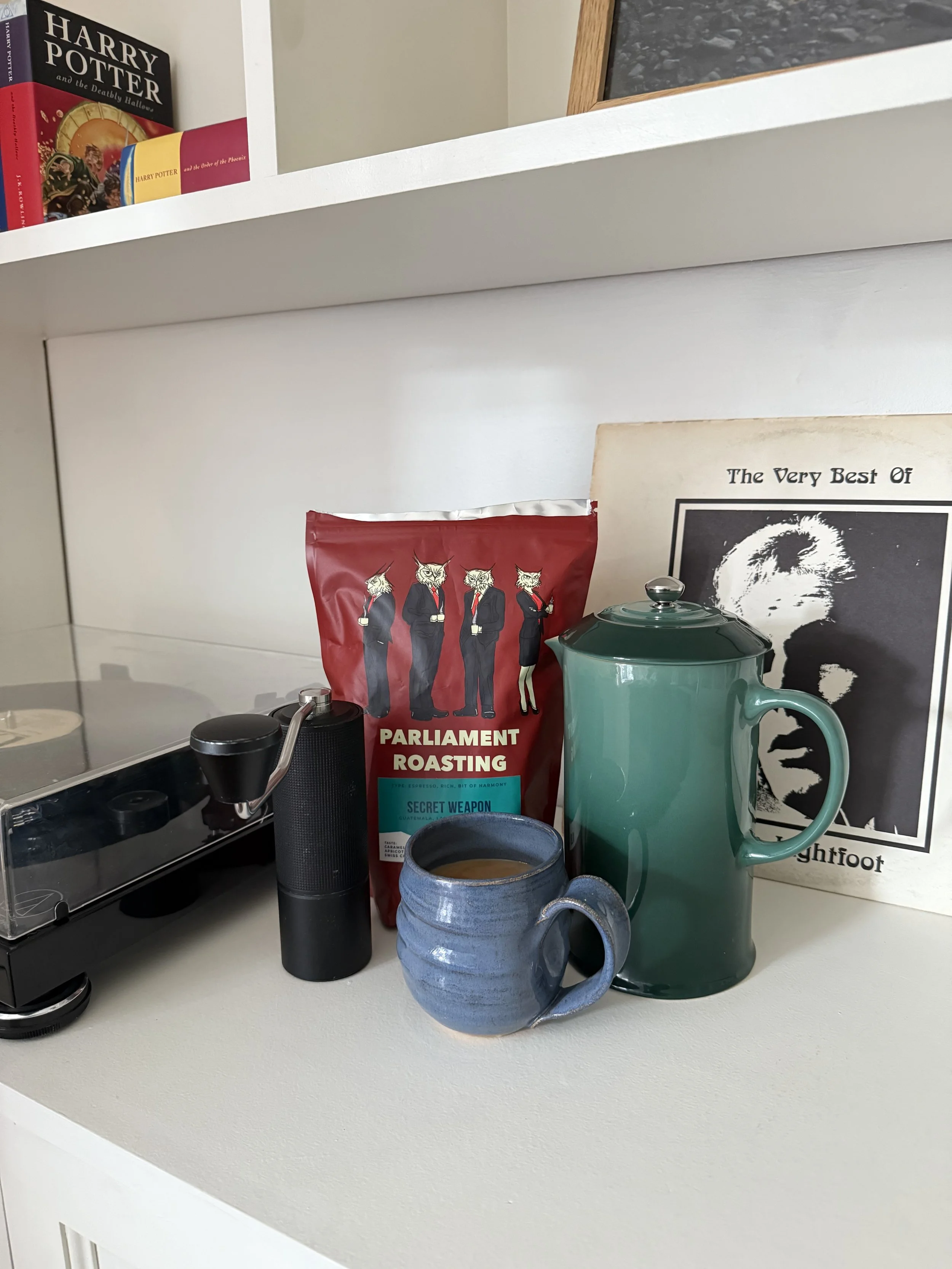
Morning Ritual: Nicole & Conner
Nicole and Conner hail from Toronto Ontario. They enjoy a nice Saturday morning coffee with the sweet sounds of a record, while completing the Globe & Mail crossword together. Their second cup is usually brewed to go for a walk around the neighbourhood with their dog Riley.


defining parliament roasting
I’ve been thinking a lot lately about what I want Parliament Roasting to become. What makes it different from the many amazing coffee roasteries and brands in the Lower Mainland. When I think about how I want to define the ethos of Parliament Roasting it’s this:
Creating a personal coffee experience that gives you more than just a nice cup of coffee. A company that lets you feel like you’re part of the journey.
At the heart of this is a desire to truly understand your coffee experience and give you more than you expect when you buy a bag of beans. That might be sending you photos of your beans during the roasting process, or personalizing a playlist of songs for you to listen to while you sip. Figuring out how you like to enjoy your coffee, grinding it for you, or getting it into your hands as fast as humanly possible. It’s this sense of personalization that I want you to feel when you taste the coffee, or chat with me at a market. You’re part of this journey and your input into this company matters as well.
I want you to see my passion for great coffee and good music, and I always want you to feel like you’re getting more than you expected. Being a small micro roaster gives me such a great opportunity to continue to push the boundaries of personalization, hospitality, and service, and I get to explore what that means for my customers.
It’s also why things will continue to evolve and more will continue to get added and adjusted.
I’ve written a bit about the book that really started it all for me, you can read about that in my review of Unreasonable Hospitality to get a bit more of an idea as to why i’m moving the company more in this direction. Those core principles drive my desire to do more to create a personal coffee experience for each customer. And each new interaction with you helps me tweak and change and adapt to create something even more memorable.
I’m always looking for feedback. Ways to make your coffee better, your experience better. Please reach out and let me know.

My Roasting Process
As a micro-roaster, I’m often asked about my roasting process. How I’m able to prep for large events, bulk roast and what equipment I use to push those nice Parliament Roasting flavours. Well, here it is, I’m going to take you through my process and give you a sneak peek into some of my secrets.
Spoiler alert, my roaster is the Genesis by Gene Cafe or the Gene Cafe CBR 1200. It’s a small scale, 1kg commercial electric roaster that lets me push out about six pounds of coffee per hour. It’s a workhorse of a machine, enabling me to do back-to-back-to-back roasts. And it is a manual roaster, my friends, no digital roasting programs or software hookups here. I use my eyes and my ears to decide when and what to do, using my tried and tested recipes, developed through extensive R&D phases over the years (just me and the beans and my machine, trying to crack the code of any particular bean).
The Process
Start with the Green
And I don’t mean money…I mean you’ll want to source some high-quality green beans. I focus on Guatemala because I really love the region, the terroir, and the flavour profiles. For Parliament it makes sense to really focus on one region and dial in those roasts. I use Common Goal Coffee as my importer and procurement specialists to get me high quality micro lots from some of the best producers in the region. Everything I’ve gotten from them has been excellent.Preheat and Charge
Depending on what type of roast I’m doing I’ll do either a long or short preheating phase to get the roaster ready for the first batch. The first preheat always takes a bit longer. For my flagship medium and dark roasts, I tend to set my roaster at 242C and preheat it up to 200C knowing that as soon as I drop the first batch of beans it’ll drop the internal temp to around 150C and then I’ll get my gradual climb up to the 205C mark where things really start happening. Note: For the honey-processed roast I’m doing a much shorter preheat and charge and a more gradual temperature climb and temperature drop so I don’t scorch those beans and bleed the flavour.Drying and Maillard Phase
The first eight to nine minutes of my roasts are the drying phase. That’s where you’ll see the colour change from green to yellow to light brown. It’s also where your Maillard reactions start happening (yay science!) – that’s where amino acids and reducing sugars in the beans start to react and create your complex flavours, aromas, and body. Some folks want to push through the Maillard phase fast and get to the next stage because they want smooth easy drinking coffee. I like to prolong it a bit because that’s where those tasty notes of toffee, caramel, and hazelnut get formed.First Crack and Ride
The first crack – this has always been the key to the flavour of my roasts. This is your first auditory clue that things are progressing the way they should. It will start to sound kind of like popcorn popping, but much more subdued. For me it happens around the 10:30sec mark when the internal bean temperature hits about 205-207C. This will carry though to about 11:15sec mark and I tend to pull the heat down to about 237C and let it ride to the 14min mark for my medium roast and 15min for my dark roast. When I pull my dark roast, I hear a second set of popping sounds called second crack.Cooling and Bagging
The beans hit the cooling tray for about three minutes to pull down the temp and stop additional cooking of the bean. I also inspect all the beans, taking them from one container to another to make sure they all look the way they’re supposed to. From there, I bag and seal them immediately to start the off-gas process. (I talk about the off-gassing and resting phase in an earlier article. You can read more about that, and when to crack the seal on your coffee, in ‘Stay Fresh' When should you crack the seal on your coffee
So, there you have it. A bit about my roasting process and the way I take my beans from green Guatemalas to deliciously roasted Parliament Coffee.
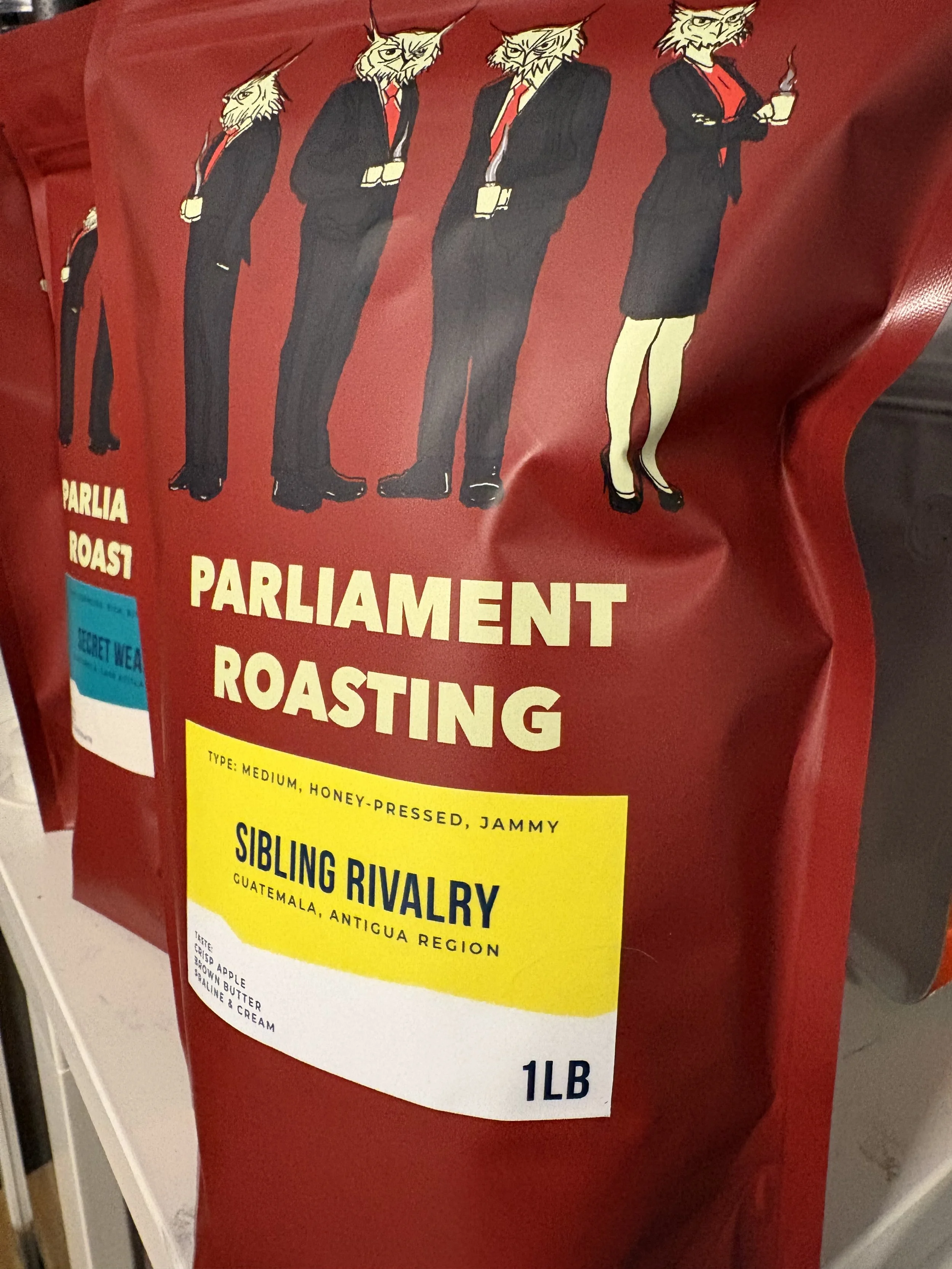
Sneak Peek: ‘Sibling Rivalry’
So lately, we’ve been cooking up a special new limited edition medium roast for you to try. We were able to get some really high quality honey-processed beans from Antigua in Guatemala. They’re from producer Richard Zelaya at the Finca Santa Clara farm. I’m really excited to share it with you. Our new roast, called “Sibling Rivalry”, will bring hints of crisp apple, brown butter, and pralines & cream. It has a nice sweetness with a hint of fruit forward acidity.
What the heck is a honey-processed bean anyway?
A honey-processed green bean is an unroasted coffee bean that has been processed using a method where the outer skin of the coffee cherry is removed, but a significant amount of the sticky, sugary pulp is left on the bean while it dries. Contrary to the name, there is no actual honey used in the process. But that nice pulp does give it a signature sweetness. It’s a complex coffee and, to be honest, it’s a bit more temperamental to roast. That same nice sticky sweetness is also really prone to scorching in the roaster and it demands a more gentle, low and slow, gradual heat profile to really pull out the flavours without burning the bean.
When can I get it?
It’ll officially be available to buy at the upcoming Clayton Farmer’s Market on May 31. And only available for a limited time as these beans are hard to come by and I only have one 45kg bag. But! As newsletter readers you get special access to this roast right now! Message me and ask for the new roast and i’ll make sure it’s in your hands within the next few days!
Of course, a new roast means a new playlist, have a listen below for a sneak peek.
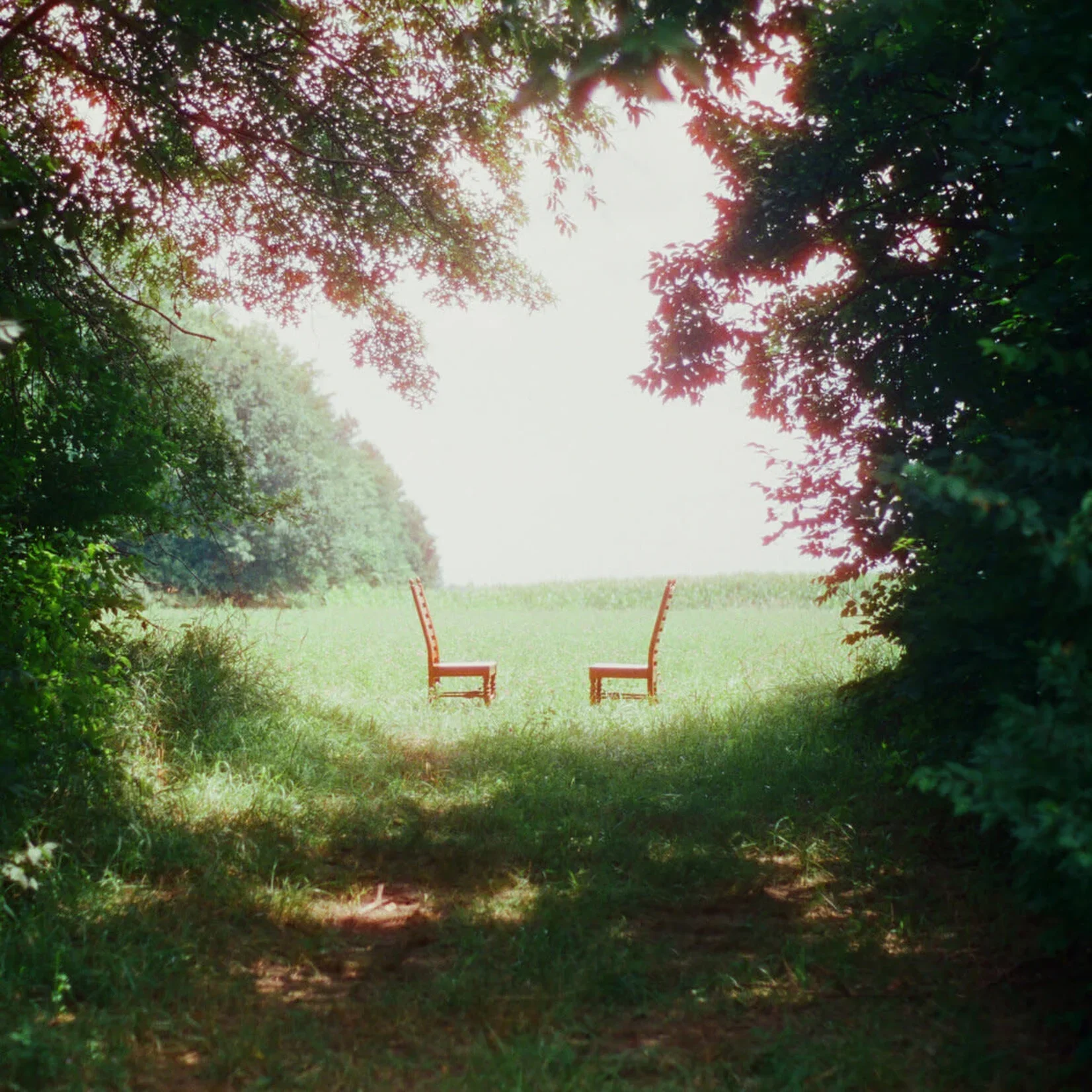
Ratboys - Singin’ to an empty chair
I’ve been listening to Ratboys in the roastery quite a bit this month while prepping for May markets. I loved their 2023 album The Window and they recently dropped a really nice record that i’ve been groovin’ to. Check out ‘Singin to an Empty Chair for some fun poppy hooks to get you through the day. Something about Ratboys just feels like summertime for me.
Personally I really like “Anywhere” and “The World, So Madly”.
I hope you’re having a sunny beautiful day.

Book Review: Unreasonable hospitality
Simply put, this book changed my life. In fact, I can pretty honestly state that I wouldn’t have taken the leap with Parliament Roasting if it weren’t for Will Guidara and his mantra about hospitality. Although you’ll probably find this book in the Business section at your local Indigo, truly it belongs beside other chef-type memoirs like Kitchen Confidential and Eat a Peach. It tells the story of restaurateur Will Guidara’s climb from running front of house at various upscale New York restaurants to turning Eleven Madison Park in NYC into the top ranked restaurant in the world in 2017. Guidara does a great job in making this book feel less like a business textbook and more like a revelation of what it’s like to work front and back of house in some of the greatest New York culinary institutions. From creating the menu program at the Museum of Modern Art, to having acclaimed chef Daniel Boulud cook him omelettes when he was in school after a crazy night of partying, there are enough amazing tales to keep you invested all while building what the true centre of this book is all about – how the act of true hospitality can make your business great.
Will’s ethos is simple. If you can create an amazing experience for your diners that matches the amazing food coming from the kitchen, you can become the best restaurant in the world. With a razor-sharp focus on hospitality designed to create memories, Guidara wants to give people more than they expect.
“If hospitality is about making people feel seen, the best way to treat them is not like a commodity, but as a unique individual. Unreasonable hospitality means that one size fits one.”
It’s about understanding that in order to be great you need to always, always, always over-deliver on service to your guests (or customers, or clients, or coffee fans). And attempt to make the experience feel custom made for each individual. In what is a very memorable section of the book, Guidara talks about the Dreamweavers he employed at Eleven Madison Park – employees whose actual job is to create bespoke and memorable experiences for the diners at the restaurant. In one interaction, a dreamweaver overhears a table of guests from out of town say that they regretted that the only thing they didn’t get to do was eat a New York-style hot dog. On the spot he decides to send employees out to get several New York hot dogs from a vendor up the street and then has the chef plate it up as a special extra course for that table. (You might remember a similar scene involving a Chicago deep dish pizza on the “Forks” episode of The Bear, which was inspired by this moment.) Of course, the table is ecstatic. And it proves the point, if you can uncover these little memorable moments and actually make them come to life, you can take your customers from having a really good meal, to having probably the best meal of their lives and a guarantee that they’ll tell everyone about it.
Throughout this book you also get a chance to read about what didn’t work for Will and his restaurants. Every exciting new idea isn’t necessarily going to work. It’s not about perfection, but it is about constant improvement. And the understanding that sometimes it takes four or five or six tries to get something right. As both Will Guidara and head chef Daniel Humm figure out, there’s a lot of greatness out there, and to be the best, they needed to figure out what could set them apart in the minds of food critics, Michelin guides, and best restaurant lists. Spoiler alert: A completely in-sync, absolute dedication by the front and back of house to improving and refining every detail and interaction, ultimately created an experience for diners that is unlike any other restaurant. Making sure that the memorable food comes alongside a memorable experience leaves the customers – and the entrepreneurs -with something better than they could have ever expected.
“People will forget what you do; they’ll forget what you said. But they’ll never forget how you made them feel.”
BONUS CONTENT: There’s a Netflix series from 2018 called “7 Days Out” that explores some of the most intense events and the preparation needed to pull them off. Episode 2 features the re-opening of Eleven Madison Park showcasing Will and Daniel’s partnership. It’s worth a watch!
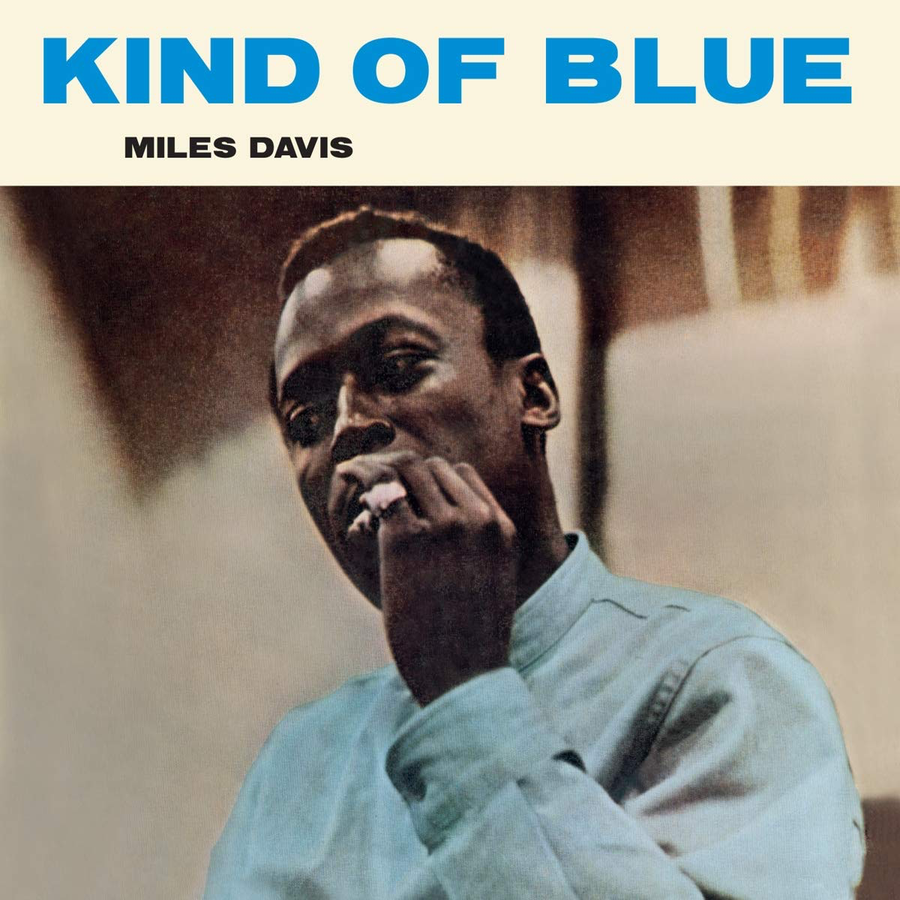
The sunday morning Jazz Express
Look, I get it. Jazz isn’t for everyone. Some of it can feel pretentious, or challenging, or just straight up bizarre. But, hear me out. If you’re new to jazz, not sure you like it, or just want to try a fun morning experiment, take this jazz journey with me. We’re going to walk through five songs that pair beautifully with a cup of coffee on a Sunday morning. So, fire up the kettle, grind some beans, make yourself a hot pot and let’s jump on the Sunday Morning Jazz Express:
Stop 1:
Miles Davis - Kind of Blue - So What
Alright, you’re grinding your coffee, you just woke up, kind of tired, so what? The sun is stillrising, it’s cool, it’s crisp, and everyone in your house is still sleeping. So what? So, you need that first steaming cup of coffee. Your first stop is So What by Miles Davis. This is going to ease you into our journey, you’re going to start to feel some pep in your step, you’re going to smell those coffee beans brewing in your French press. It’s the best kind of easy listening, just enough tempo to get the blood flowing, the wheels going. Get ready. You’re about to start your day off the best way possible.
Stop 2:
Thelonious Monk - Monk’s Dream - Take 8
Okay. You’ve got your coffee and you’re now sitting down in your favourite chair. You’re enjoying those first few sips and you need something that matches the energy that’s starting to pulse through your veins. Enter Thelonious Monk. A literal wizard of a composer and pianist. He’s going to keep that tempo going, get things moving quicker, but it isn’t going to challenge you in a way that is jarring. It’s going to keep that crescendo moving as you finish that first cup.
Stop 3:
Cannonball Adderley – Somethin’ Else - One for Daddy-O
You need a refill on your coffee, and as you’re pouring another cup you need a nice interlude, nothing crazy just some well-timed, nicely arranged, vertuoso jazz from Cannonball Adderley. Maybe you’re starting to hit your pace a bit now, throw in a slice of toast and honey. This song is as smooth as butter and it’s going to prime you for that second cup of coffee.
Stop 4:
Duke Ellington & John Coltrane – Duke Ellington and John Coltrane - Angelica
You’re two cups in and feeling lively. You need something a bit more upbeat to keep your morning energy up. The sun is shining, the day is about to really get going, and Angelica feels like what you might hear playing in the background at an upscale bistro, and why not? That’s the vibe you need right now! This may be the most challenging of the bunch, but that’s not really saying much. You’re up for it! It’s more about matching the energy as you flip through a good book.
Stop 5:
Thelonious Monk – Straight, No Chaser – Straight, No Chaser
As we round the bend for our final song on this Sunday morning express, we’re going to visit a familiar face. It’s Thelonious Monk to finish us off. After Angelica you need something that is still jaunty but maybe just a touch more relaxed. We’re not trying to get crazy here! Straight, No Chaser is the perfect ending on this mini jazz journey. It’s smooth, easy, and has enough sax and piano to keep your toes tapping as you finish off that second cup of coffee.
Well, that does it, a quick five stop song journey through a few of my morning go-tos. You could call this my Sunday morning ritual. A quick spot of jazz with several cups of black coffee. I hope you enjoyed yourself on the Sunday Morning Jazz Express. Let’s do it again sometime.
Bonus Content: Did you take the Sunday Morning Jazz Express? Send me a picture showing your coffee with one of these songs, and you could win a free 320gm bag of Good Morning, Captain medium roast.