
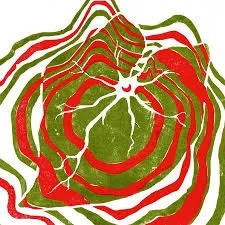
The tip top albums of twenty-five
1. Hotline TNT – Raspberry Moon
My top album of the year turned out to be a chance discovery at the Vogue Theatre last May. I had never heard of them; their name was strange; their new album title sounded pretty odd. I had no expectations. And they absolutely blew me pieces. They have this hazy unplugged sound that just feels like you’re driving down a California highway in 1997. Don’t get me wrong, there’s nothing inherently mind blowing about the sound - t’s simple chords, simple vocals, and it’s a pretty standard four-piece outfit. But there is a real rawness there that sticks with you. The songs from this album are playing endlessly in my head and it’s why I’m so frequently turning up the volume on Where U Been and letting it flip over to Was I Wrong? Break Right is another can’t miss track, honestly If you haven’t snapped up this record, please give it a listen and let nostalgia takeover: Listen to Raspberry Moon
2. Bahamas – My Second Last Album
Afie Jurvanen is such a national treasure. A perfect mix of guitar riffs and breezy vocals. Bahamas just never disappoints. Whenever a new album drops I know it’ll hit my top ten list, it’s just a question of how high it goes. I really enjoyed My Second Last Album (hopefully that’s not actually a true statement…) If you’re looking for the chillest feel-good vibes this is one to throw on. I suggest starting with The Bridge and let that roll right into Ready for a New Thing. I weirdly really enjoy this record when I go for a bit of a run or a walk on a nice spring day. It just has all the vibes. Listen to My Second Last Album
3. Sharp Pins – Radio DDR
Another happy accident. These folks happen to be opening for one of my favourite artists at an upcoming show and upon doing a bit of blind listening, I really enjoyed what I was hearing. I’m not sure they sound like the Kinks, or the Shins, or if they’re British.. I think they might be British. But I do know they’d feel right at home on the Royal Tenenbaums soundtrack. If there’s one critique I have for this album it’s that the songs start to blend a bit and even though I know I like it, I’m not entirely sure when one song ends and another begins. Give When You Know a listen or Storma Lee. To be honest you can’t really go wrong with any track on this one. Listen to Radio DDR
4. Hayley Williams – Ego Death At A Bachelorette Party
Kudos to my coworker Jas for reminding me how great Hayley Williams is. And sure, I was one of the 10 zillion high school dudes that had a crush on Hayley Williams. It’s no secret. We all did. I think this is her first solo album but you wouldn’t know it. She is such a talented singer, songwriter, musician. And this departure from Paramore feels much more mature. The sound is expertly arranged, it’s grown-up, and that’s a good thing. It’s a very listenable record and has hits right off the bat with Glum and Kill Me. Listen to Ego Death At A Bachelorette Party
5. Pup – Who Will Look After the Dogs?
Always a high-octane trip right from the start of their records. I don’t listen to a ton of punk. But I make an exception for Pup because that sound is so distinct. It’s all gas no breaks, and let’s be honest sometimes you do just wanna put your foot on the gas. The tracklist on Who Will Look After the Dogs does feel a bit similar from song to song, but like Sharp Pins so many of the songs are so good that it doesn’t really matter. That being said, I really like Concrete. True to form they have really visceral lyric style that is sometimes a bit much, but that’s what you come to expect with Pup. And I love that. Best Revenge is probably the hit on this record and it’s really good too, an easy one to belt and yell out the window when you’re driving too fast. Listen to Who Will Look After the Dogs?
6. Blood Orange – Essex Honey
I kind of forgot about Dev Hynes. I listened to a lot of Lightspeed Champion back in the day. But was really happy when I stumbled across Essex Honey this past year. It’s got that experimental R&B and an almost layered jazz sound that is so unique. His lyrics are incredibly poetic, although at times the layering can be a bit of a chore. This album hit quite a few best-of lists, and it’s well deserved. I hope this gives Dev a bit more mainstream success. Vivid Light stands out as the track I keep going back to. That, and Somewhere in Between are the hits in my mind. Listen to Essex Honey
7. Japanese Breakfast – For Melancholy Brunettes (& sad women)
This is another really strong album by Michelle Zauner. Every album she puts out is in my opinion more expertly written, produced, and arranged than the last. You can really hear all the intricacies and layering. This album is a bit more orchestral and it relies a bit more on her beautiful vocals than her earlier pop-punk-indie records. And I respect that growth because Michelle has the pipes to carry it. I really like Honey Water and Mega Circuit and heck, even Orlando in Love is a really solid track. I could probably move this one up the rankings. I probably should. Listen to For Melancholy Brunettes (& sad women)
8. Panda Bear – Sinister Grift
Let’s get weird. You’re never quite sure what you’re going to get with Panda Bear and that means it might be beautiful, it might be bizarre. Sometimes a bit too bizarre. But I’ll take that trip anytime. Praise kind of feels like if Pet Sounds went electric. There’s some great harmony and layering on that track, but it’s still unquestionably Panda Bear. Listen to it, you’ll see what I mean. Ferry Lady is that track that goes pretty bizarre, like something from a weird dream. I like throwing this album on as a nice change of pace from some of the other safer picks on this list. Listen to Sinister Grift
9. HAIM – I quit
I love HAIM. Like a lot. But sometimes I find their albums can be growers. They don’t necessarily stick with me right away, they need some time to ruminate. I think I definitely have that vibe with I quit. It’s a bit more heavily produced than what I’m used to groovin’ with HAIM and I’m not 100% sure there’s a hit on this record. There’s a lot of really good songs, but I think it’s missing something like The Wire or Want You Back. Relationships is probably the closest and I do really like Lucky Stars. That might be the grower right there. At the end of the day, it’s still HAIM and it’s still like really great. Listen to I quit
10. Perfume Genius – Glory
Glory is just a really solid indie record. And I always have time for those. Perfume Genius is very listenable from top to bottom. It’s something that will undoubtedly appear on Spotify playlists all year long. No Front Teeth is the song I’m digging the most, it has a way of jumping around a bit and the breakdown at 1:44 almost reminds me a bit of Pavement. You don’t really see it coming and it works so well. This is a happy album to stumble upon and while it didn’t get heavy rotation for me this year, I still dig it! Listen to Glory

Snail Mail - Lush
I’ve been a massive fan of Lindsay Jordan for some time now. Her new album comes out March 27 and she happens to be in Vancouver on May 9. Her new album sounds great, and I can’t wait to see her live, but it’ll be tough to beat her debut album “Lush”. I really love how she mixes her drums and guitars. It’s right up my alley and it’s an album that has been on heavy rotation for me since it was released in 2018. I’m a big fan of ‘Pristine’ but ‘Heat Wave’ is also really really good.

Flight Patterns and Hunting Tendencies of The Great Horned Owl
Great Horned owls - or the bubo virginianus - is one of the most adaptive and resilient birds in the owl family. A natural and nocturnal predator, they can be found throughout North America, from rural wooded areas to swamps, deserts, and even suburban cities. With so many possible habitats, you’d think these owls would travel anywhere for food. In fact, Great Horned owls are home bodies. They don’t move far from where they were born, almost never migrate, and instead tend to stay and hunt in their usual habitat year-round. Highly territorial, Great Horned owls tend to live and hunt in a fixed range of about 8-10 km.
On the Hunt
As one of the larger birds of prey (standing at around 25 inches tall with a three to five foot wingspan), you’d think they’d be easy to spot. But Great Horned owls possess the deadly combo of the gift of silent flight and an inherent camouflage with their feather pattern They fly in near complete silence due to specialized, soft-edged feathers that muffle sound and break up air turbulence.
“Great Horned owls have a suite of unique wing and feather features with comb-like serrations. It not only allows them to reduce sound, but the size of the wings also let them fly unusually slowly, giving them the ability to glide noiselessly,” says Krista Le Piane, a graduate student at University of California, Riverside.
And while its silent flight, excellent hearing, and great eyesight allow this owl to be a formidable hunter, oddly enough Great Horned owls have a very poor, almost non-existent sense of smell. That might be limiting for some animals, but its poor nose actually opens up more food options, allowing the Great Horned owl to be one of the only natural predators for skunks. In addition to skunks, they hunt and eat more than 50 different species of mammals.
Your Nest is My Nest
As part of their adaptive behaviour, Great Horned owls don’t build their own nests. Instead they steal or squat in nests made by hawks, crows, or herons. And if they can find a natural tree cavity or an abandoned shed, even better. They tend to use nests for a quick nap or to hideout during the daytime, and to lay their eggs, but they don’t need the shelter for warmth. Their fabulous feathers are very good insulators against the cold. And since the Great Horned owl is near the top of its food chain, they tend to live quite long for birds. They have an average lifespan of 13 years, but some live well into their 30s. As far as it's known, they have no natural predators and can be quite ferocious if another bird or beast tries to get at their young.
Finally, while there is no scientific data, or anecdotal evidence on the coffee preferences of the Great Horned owl, I’m thinking, if they did, they’d probably go for the dark roast. Right?
Taste the terroir
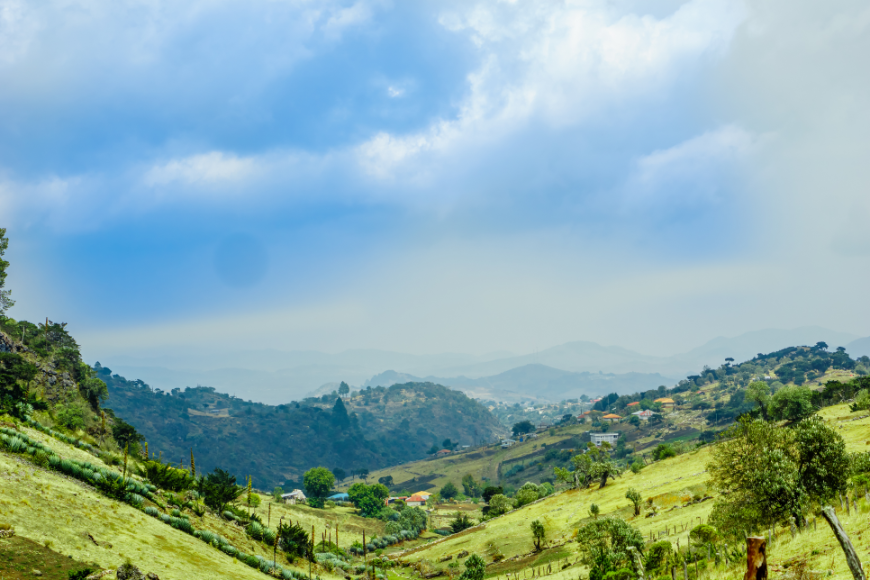
You might have heard terroir discussed when you sip a nice chardonnay or a pinot noir. It’s a term that literally means “sense of place” and it’s one of the ways a refined palate can distinguish between wine or coffee grown in different regions. The term describes the factors of the complex natural environment, like soil, climate, and topography, that combine during the growing process to give a particular grape or coffee bean their particular flavour profiles. It’s reason why some varieties of grapes or coffee plants taste wildly different depending on where they’re grown.
Factors like temperature, sunlight, rainfall, and the nutrients present in the soil have major implications on the sugar levels and acidity in the fruit grown. For example, the more sunlight, the higher the sugar level, and, depending on when the coffee berries are picked, the coffee can take on a sweeter note.
Guatemalan soil
Parliament Roasting sources the majority of our beans from the Antigua and Lake Atitlan regions of Guatemala. We focus on that region because it has a lush terroir of nutrient-rich volcanic soil with enough altitude and sunlight to give a complex and slightly sweeter tasting coffee. It’s why you’ll get hints of chocolate, cherry, and toasted nuts in our medium roasts and darker fruits like blackberries and caramel in our darker roasts. Guatemalan coffee is known for producing high quality medium, dark, and espresso roasts, and that’s where Parliament Roasting likes to live. It’s also why we don’t push lighter, more acidic, or overly fruit forward roasts. In my opinion, the coffee from the terroir we like doesn’t reveal its best flavour qualities in the lighter roasts.
So what do some of the more well known and well loved terroir’s look like? Here’s a few to get you started:
Antigua/Lake Atitlan Region:
Growing conditions:
High altitude, elevation over 1,500 metres, in nutrient-rich volcanic soil. The Antigua and Lake Atitlan regions are surrounded by three volcanos (Aqua, Fuego, and Acatenango) providing a unique microclimate with frequent mists and sunny mornings.
Climate:
Temperate, stable climate between 66-71F supporting slow, even maturation.
Harvest season:
Coffee tends to be hand-picked from January to March.
Flavour profile:
Sweet, lively acidity with notes of chocolate, spices, nuts, and fruits like cherry, blackberry, and apricot.
Rainfall:
Typically ranging between 800mm and 1,200mm per year.
Ethiopia
Growing conditions:
Southwestern highlands at elevations of 1,500–2,200+ metres. The high altitude provides cool temperatures and a significant day-night temperature difference. Key growing areas include Sidamo, Yirgacheffe, and Harrar.
Climate:
Temperate, stable climate between 64-72F supporting slow, even maturation.
Harvest season:
Coffee tends to be hand-picked from October to February.
Flavour profile:
Vibrant, complex, and aromatic profile, often featuring bright, tea-like, or fruity, wine-like characteristics. Common tasting notes include blueberry, citrus, jasmine, and floral.
Rainfall:
The southwestern, coffee-growing regions generally experience high annual rainfall, sometimes exceeding 1800 mm per year.
Indonesia
Growing conditions:
Mid to high altitudes, and a warm, humid, tropical climate provide ideal growing conditions. Typically high quality Indonesian coffee is grown at elevations between 800 and 1,400 metres. Key growing areas include Sumatra, Sulawesi, Java, Bali, and Flores.
Climate:
Warm, humid, and tropical environment between 59°F–79°F providing the perfect, cooler climate for premium coffee.
Harvest season:
Coffee tends to be hand-picked from October to February.
Flavour profile:
Heavy, syrupy body, low acidity, and distinct earthy, rustic flavours. Dark chocolate, cedar, tobacco, licorice, and herbal undertones.
Rainfall:
Indonesian coffee, particularly Sumatran, thrives in high-rainfall regions often 2,000+ mm/year.
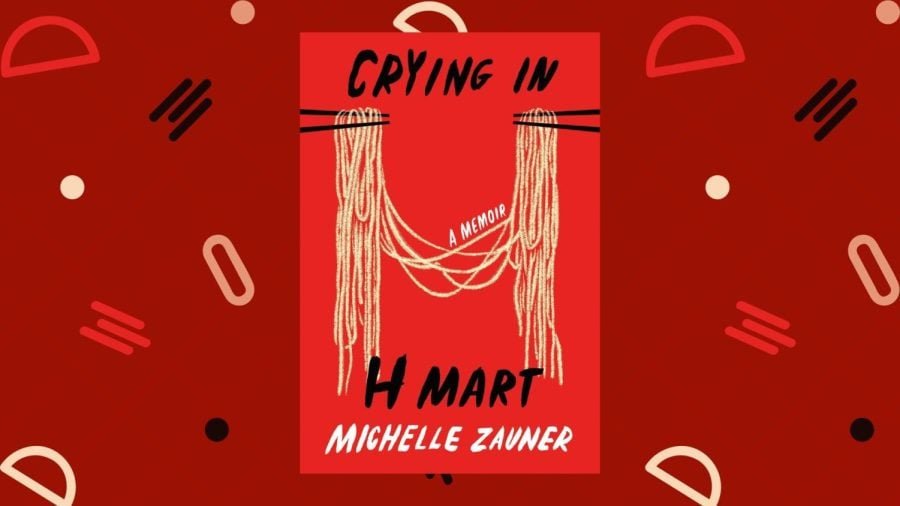
Book Review: Crying in H Mart
We’re walking it back a few years to a book both beautiful and poignant, one that rips you open and lets you peer into the reality of grief. Crying in H Mart is a memoir of identity.
Michelle Zauner is the only Korean American girl in her Eugene Oregon school, and right away you can feel her struggling and stuck between two very different worlds. One foot trying to belong to the youth culture of Americana, the other firmly planted in her mother’s Korean heritage. Zauner doesn’t sugarcoat her adolescence, there’s a sadness there, there’s emotional and physical abuse, there’s a solitary childhood and a longing for emotional support. You can feel the tension within her family and from a young age her relationship with her mother is fraught. It’s so full of cracks it sometimes makes you wonder if there’s any love at all.
But it’s in the aisles of H Mart where these feelings start to turn. At its core, this book is about the deep connection of food and how the preparing and sharing of ingredients can be the greatest form of generosity, especially when words fail. The hallways and store shelves in H Mart bring out the delicacies that would shape Michelle’s childhood. Pork belly with seafood noodles, kimchi, jolly pong, tteokguk with gochujang. For Michelle and her mother it is their shared sanctuary, and it’s the bond that binds them.
“Food was how my mother expressed her love. No matter how critical or cruel she could seem, constantly pushing me to meet her intractable expectations, I could always feel her affection radiating from the lunches she prepared.”
Preparing food for Michelle is how her mother was able to best articulate her feelings. And that also becomes Michelle’s immediate response upon learning of her mother’s cancer diagnosis. Having forged a path as a musician as a young adult, the news of her mother’s terminal illness causes her to immediately drop everything and move back home to Eugene to care and cook for her dying mother. It becomes her life goal to make sure her mom is getting enough calories as she recreates the food of her childhood, cooking the very things her mother cooked for her. There is a comfort in preparing food that takes the place of words. It fuels Michelle’s way to process grief and in the aftermath of her mother’s death all she can do is make inordinate amounts of kimchi, it’s the only thing that makes sense.
Crying in H Mart is about the memories we take for granted, and those little moments that we can’t get back, but remember forever. And in the end this book is a tribute to all the ways Michelle’s mother truly cared for her, the words she never said, but the ways her food often said everything.
“In H Mart, I’m collecting the evidence that the Korean half of my identity didn’t die when my mother did. I’m not just on the hunt for cuttlefish and three bunches of scallions for a buck: I’m searching for memories.”
--
If you want to know in more detail about all the incredible Korean ingredients and dishes that are talked about in this book, Ars Nihil made an amazing glossary/zine that you can download for free.
—
Outside of penning this beautiful memoir, Michelle Zauner is best known as the lead singer of Japanese Breakfast, a dreamy indie-pop band. Their first album Psychopomp was composed of songs written in the weeks after her mothers death.
Her music video for “The Body is a Blade” features recreated photographs of Michelle and her mother. It’s worth a listen and a watch.

‘Stay Fresh’ When should you crack the seal on your coffee?
Buyers and drinkers alike have always maintained the fresher the roast the better the coffee. But new science seems to be bucking that trend and more and more roasters are saying, “let that coffee sit for a bit.”
It’s been baked into our brain. The fresher the roast date the better the coffee…right? If I just roasted and packaged some beans yesterday, you’d assume they’d be drinking their best in just a few short days? Well not so fast my coffee compadres.
More and more articles are being penned by roasters all over the world clamouring for coffee drinkers to wait three, four, even five weeks after a roast date to crack open their coffee. How can this be? Do we really need to let coffee rest for weeks to hit optimum taste profiles? Isn’t fresher always better?
The answer is a bit more complicated than that— and has more to do with how we define the term “fresh”. The fact is, the roasting process isn’t technically finished when you dump, cool, and package your beans. There’s still a lot of science happening in that bag of coffee that takes time to fully develop. As a roaster, you desperately need the excess C02 from the roasting process to essentially bleed off from the beans and fully escape the bag. That’s why most coffee bags have a built in C02 valve which allows C02 to leave without any excess oxygen re-entering the bag.
But it’s more than just bleeding C02, the timeframe can also depend on the way it was roasted. For instance, roasters that use hot air (like those roasted by yours truly) seem to benefit more from a longer resting time. Larger drum roasters powered by gas use conductive heat transfer. And according to science, conductive heat helps make beans more porous, develops them quicker, and essentially can allow for less resting time. But as with so many conundrums in the coffee world, this isn’t a hard and fast rule either. Light to medium roasts benefit the most from a longer resting time as the C02 and flavour development need some extra time on the clock (2-3 weeks and sometimes as long as 8 weeks!), but darker roasts where you’ve presumably taken the beans to a more porous and fully developed state need substantially less resting time (only 4-6 days).
Even still, understanding where a coffee was grown adds another important element in deciphering when you should pull out the grinder. Typically higher altitude coffees in Kenya, Guatemala, or Columbia can stand to rest longer than a lower altitude coffee from Brazil. It’s generally known that it takes longer for that C02 to fully release from a higher altitude coffee and therefore they can stand the rest.
One thing is certain, it’s due time that we change our perception of what fresh coffee truly means, and use the roast date as just one indicator of when coffee can be best enjoyed. Paying attention to how it was roasted, where it was roasted, and what style it was roasted to is just as important as when it was roasted. Factoring in all of these variables helps unlock the complex and delicious flavours in your coffee. So give it a rest!

Cymbals Eat Guitars - Lose
Cymbals Eat Guitars was a really good band from New York. They were coming up on the scene when Pitchfork was actually a worthwhile website. In my opinion “Lose” is a really good album from start to finish. It feels nostalgic to me. It has those wailing almost tectonic vocals that whirl around high energy guitar riffs. There’s some controlled chaos there, and I like that. I can almost imagine slamming my door and turning up the volume on this one after losing an argument to my roommate in 2010.
Here’s a fun fact for you… the name Cymbals Eat Guitars is from a Lou Reed quote describing his thoughts on the Velvet Underground’s sound. To be honest, I never really understood The Velvet Underground. But hey, it’s a good band name.
Brewing Tips
Parliament Roasting uses high quality Guatemalan beans imported through Common Goal and certified Fair Trade and
Organic. When you start with a good product, the rest is just experimentation to find out how you like to drink your coffee. Your preferences might not be mine, and I’d love to know how you prepare yours. Send me a message at andrew@parliamentroasting.ca
Here is how I prepare my morning coffee each and every day.
I like to grind my coffee right before I brew it, to the consistency I’m looking for (a coarser grind for French Press) and only grind what i’m going to immediately use. The goal here is to preserve the integrity of the bean and it’s flavours, and as soon as you grind it down the clock starts ticking on your coffee’s shelf life. I tend to start my day with a French Press of medium roast, because I need a cup right away and more for my thermos on the way to work. For French Press with a burr grinder, I like to set it to a coarse grind at about a level 8/10 on my grinder.
I use the following ratio when I’m making a French Press:
5 cups of boiling water
Slowly poured onto 5 tbsp of coarse ground coffee
Stir well and let that sit on a 4 minute timer before plunging.
If you like your coffee a bit stronger adjust that ratio to 5 cups of water to 6 tbsp ratio.
I also like to wait 2-3 minutes before drinking, let the temperature come down a bit and let the flavours settle.

Upcoming Markets
Confidence doesn’t always arrive with a bold entrance. Sometimes, it builds quietly, step by step, as we show up for ourselves day after day. It grows when we choose to try, even when we’re unsure of the outcome. Every time you take action despite self-doubt, you reinforce the belief that you’re capable. Confidence isn’t about having all the answers — it’s about trusting that you can figure it out along the way.
The key to making things happen isn’t waiting for the perfect moment; it’s starting with what you have, where you are. Big goals can feel overwhelming when viewed all at once, but momentum builds through small, consistent action. Whether you’re working toward a personal milestone or a professional dream, progress comes from showing up — not perfectly, but persistently. Action creates clarity, and over time, those steps forward add up to something real.
You don’t need to be fearless to reach your goals, you just need to be willing. Willing to try, willing to learn, and willing to believe that you’re capable of more than you know. The road may not always be smooth, but growth rarely is. What matters most is that you keep going, keep learning, and keep believing in the version of yourself you’re becoming.